Anker SOLIX F3800 Plus vs EcoFlow DELTA Pro 3 vs BLUETTI Apex 300
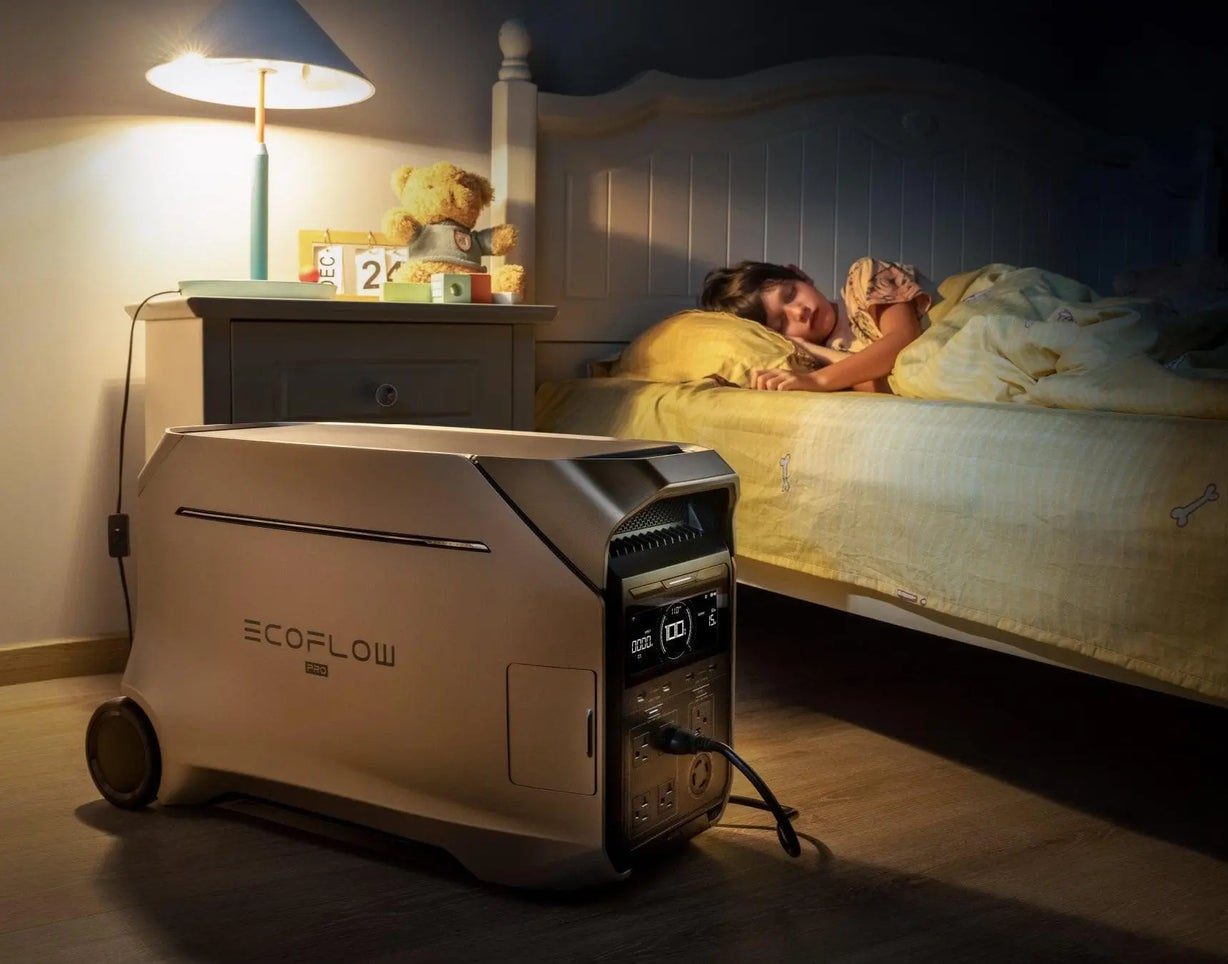
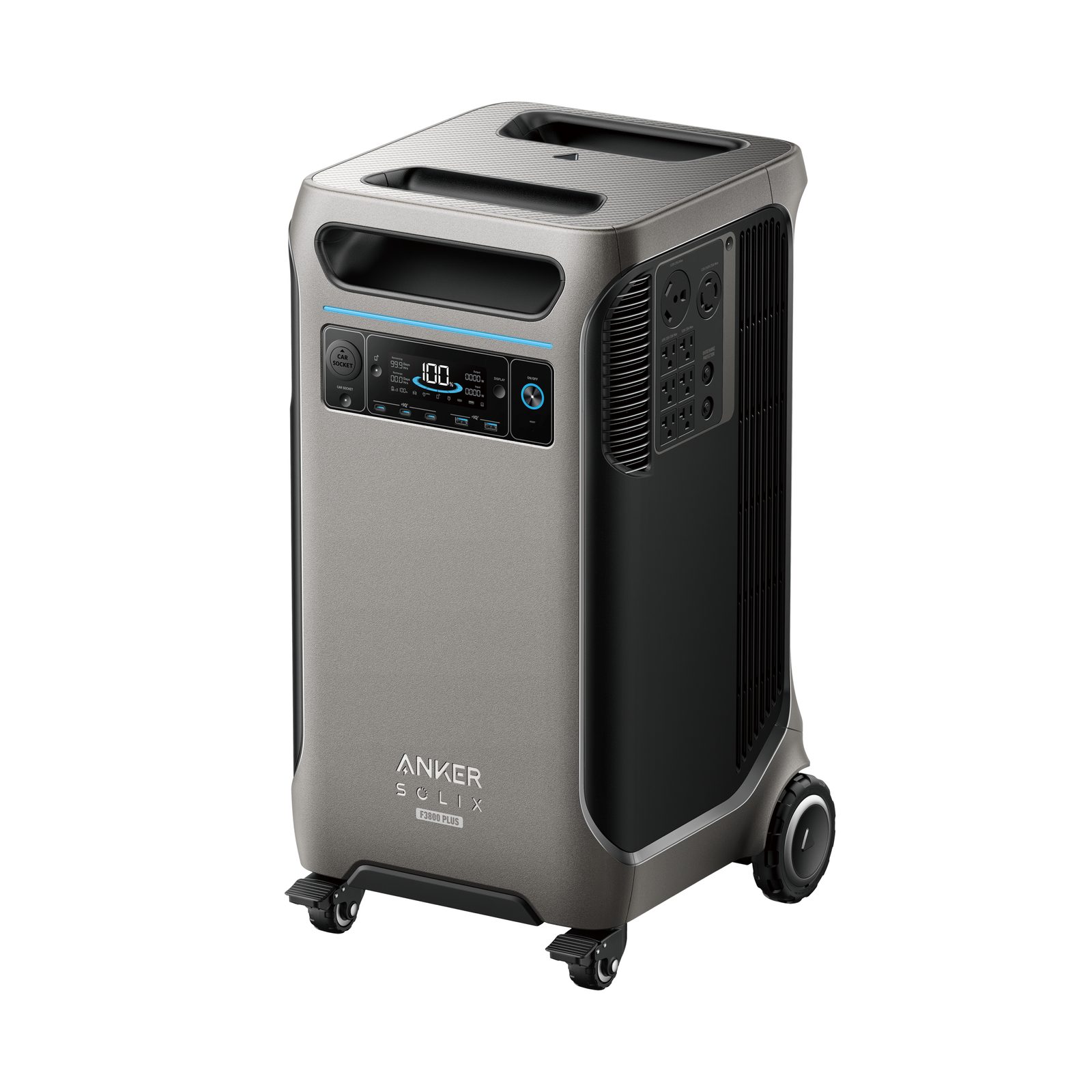
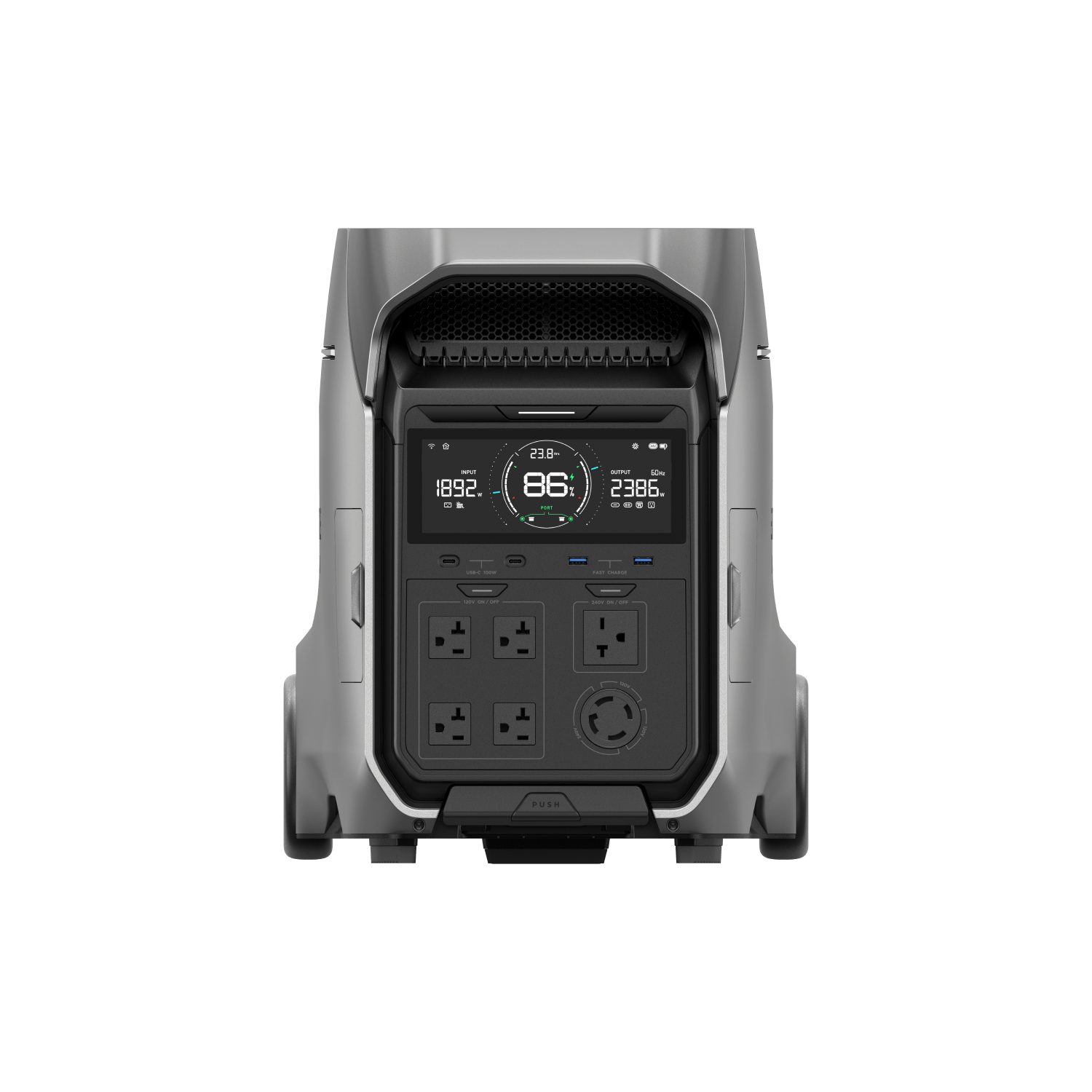
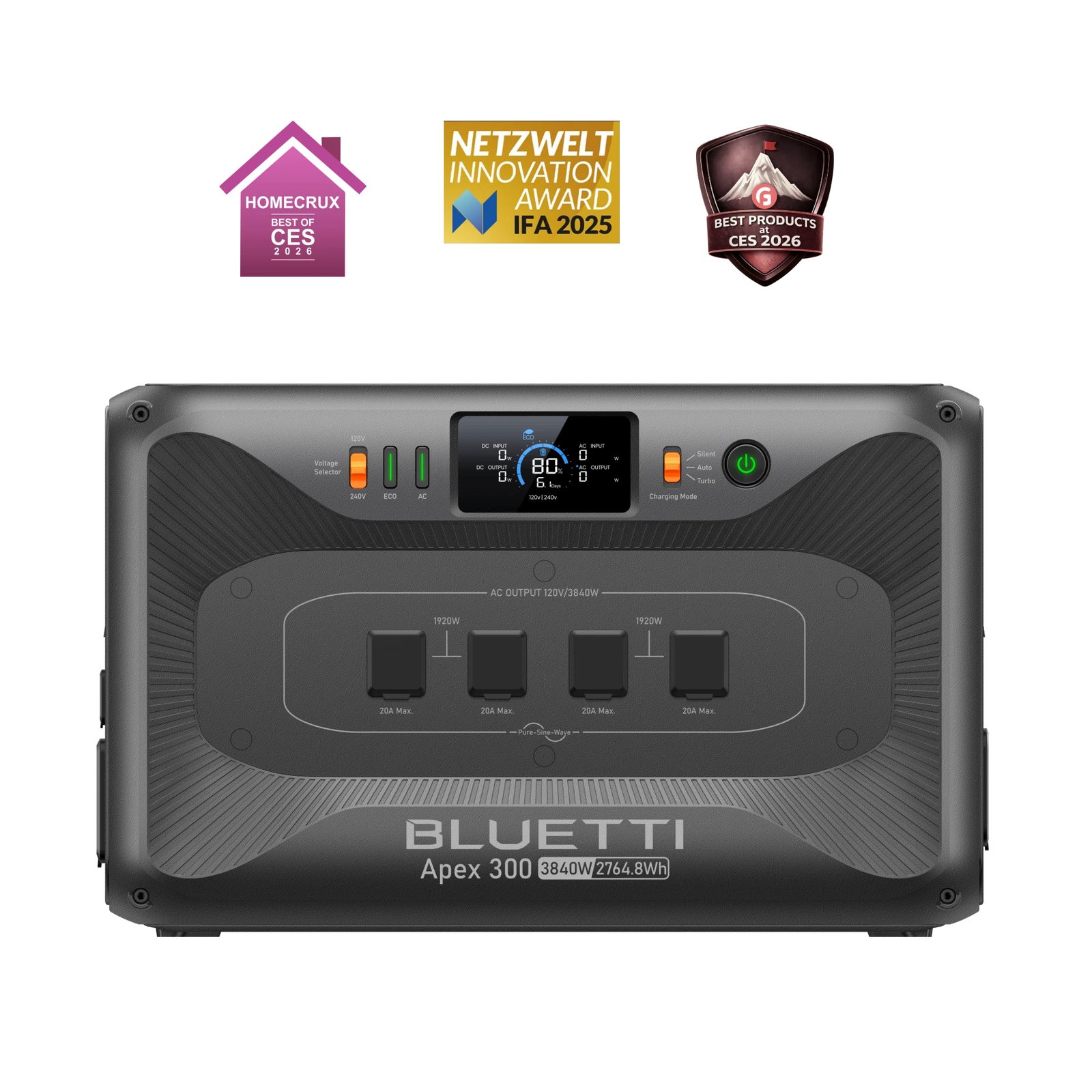
For most homes, the EcoFlow DELTA Pro 3 is the balanced pick: the biggest battery of the three (4,096Wh rated, about 3,482Wh you can actually use) and it accepts a full four panel solar array. The Anker SOLIX F3800 Plus wins if you need serious 240V output, with 6,000W of native split phase power (split phase means it feeds both sides of a home panel, so it can run 240V loads like a well pump). The BLUETTI Apex 300 is far cheaper as a full system (about $2,766 with tax in our checked configuration) but it can only connect two 400W panels, so it refills slowly and really wants an expansion battery for multi day outages.
Start with usable capacity, not rated capacity
Every power station advertises its rated watt hours. What reaches your fridge is less, because the inverter and electronics consume part of the battery on the way out. Across this class of lithium iron phosphate (LFP) stations, planning on 85 percent of rated capacity is the honest rule, and it is the factor used in every table on this site.
| Station | Rated capacity | Usable at 85% | Solar input from four 400W panels |
|---|---|---|---|
| Anker SOLIX F3800 Plus | 3,840 Wh | 3,264 Wh | Accepts all four panels |
| EcoFlow DELTA Pro 3 | 4,096 Wh | 3,482 Wh | Accepts all four panels |
| BLUETTI Apex 300 | 2,764.8 Wh | 2,350 Wh | Accepts only two of the four (800W cap) |
That last row is the most important line in this comparison. A big battery with a small solar input is a one day device: once it is empty, it refills at the speed of its smallest input. The Apex 300 is a good battery attached to a narrow doorway.
The full system price, with panels and tax
Station only prices mislead, because nobody runs a home backup station without a way to refill it. The totals below are the full configurations from our checked research: the station, four rigid Renogy 400W panels where the station can use them (two for the Apex 300, which is all it accepts), the cables those panels need, and 7 percent Indiana sales tax. Your tax rate and panel choice will move these numbers, but the ranking lesson survives: always compare systems, not boxes.
| System | Total with tax | Cost per usable Wh |
|---|---|---|
| BLUETTI Apex 300 system (2 panels) | $2,765.86 | $1.18 |
| EcoFlow DELTA Pro 3 system (4 panels) | $4,830.96 | $1.39 |
| Anker SOLIX F3800 Plus system (4 panels) | $4,618.03 | $1.41 |
The Apex 300 system is the cheapest per usable watt hour and the cheapest outright, and it still is not the automatic winner, because its 800W solar ceiling means a cloudy second day leaves you rationing. Price per usable watt hour tells you what the energy costs. The solar input tells you whether there will be more of it tomorrow. Our cost per usable watt hour table keeps this math updated.
Output: where the Anker pulls ahead
The F3800 Plus delivers 6,000W of native 120/240V split phase output, the strongest in this group, which matters if you want one box to feed a transfer switch and run a well pump, a furnace blower, and kitchen circuits at the same time. The DELTA Pro 3 is also a 240V capable whole-home machine and covers the same transfer switch use case for most homes. The Apex 300 is a 120V class machine in its base form, better suited to extension cord duty and a shorter list of critical loads unless you add its expansion ecosystem.
One gotcha from our research on the Anker: its solar input uses a connector arrangement that needs the right adapter cable for standard panel leads. It is a small cost, and it is priced into the system total above, but it surprises buyers who expect every panel cable to plug straight in. Details are in the F3800 Plus deep dive.
The verdict, by household
- Longest runtime per charge, simplest setup: EcoFlow DELTA Pro 3. Biggest usable battery, full panel array, no surprises.
- Heavy 240V loads on one box: Anker SOLIX F3800 Plus. The 6,000W split phase output is the reason to pay its price.
- Tight budget, one day outages, mostly 120V loads: BLUETTI Apex 300. Just go in knowing the solar ceiling is real, and budget for an expansion battery if your outages run long.
Run your own loads through the runtime calculator before you decide. Thirty minutes with your actual fridge, freezer, and sump pump numbers is worth more than any ranking, including ours.
Who should skip this
Skip all three if your outages are measured in minutes (a small UPS is cheaper), if you rent and cannot place panels (look at the apartment picks instead), or if you need automatic, unattended backup for days at a time. That job belongs to a standby generator, and no battery in this class pretends otherwise.
Plain links to the manufacturer. We may earn a commission on purchases in the future; today these links are not tracked.
Your next step: compare whole systems fairly, panels and tax included.
See the cost table