Keep the fridge and freezer cold through an outage
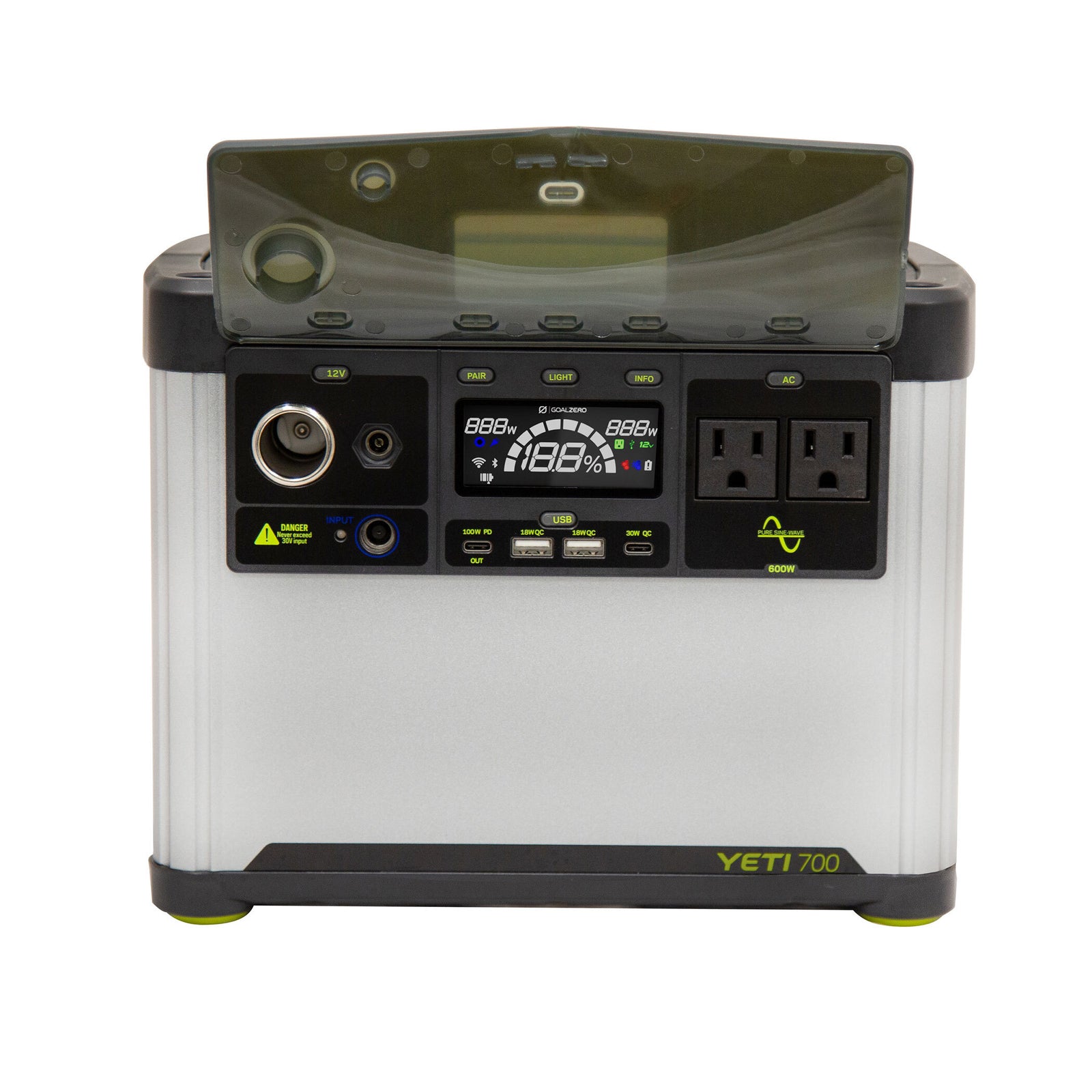
A fridge and a chest freezer together average roughly 100 to 110 watts across a day in a cool room, which is about 2,600 watt hours per day. A station with about 3,400 usable watt hours (an EcoFlow DELTA Pro 3 class battery) keeps both cold for roughly 30 hours with nothing else plugged in. Every door opening and every degree of summer heat shortens that, and the discipline in this guide is worth as many hours as a battery upgrade.
The day math, honestly
| Appliance | Typical rated watts | Duty cycle | Wh per day |
|---|---|---|---|
| Refrigerator | 150 | about 40% | about 1,440 |
| Chest freezer | 120 | about 40% | about 1,150 |
| Upright freezer | 150 | about 45% | about 1,620 |
Duty cycle is the share of the hour the compressor actually runs. A fridge in a 70 degree kitchen cycles far less than the same fridge in a 95 degree garage in August, where the cycle can pass 60 percent and the day math grows by half. Season is a battery spec whether the brochure says so or not. Worked examples with three battery sizes are in the runtime explainer, and the calculator lets you set your own duty cycle.
Free hours: the discipline list
- Do not open the doors to check. A closed fridge holds safe temperatures for about 4 hours with no power at all, and a full freezer for about 48 hours (24 if half full), per USDA food safety guidance. Every peek spends that.
- Fill the empty space. Jugs of water in the fridge and freezer become thermal mass that slows warming, and the water is drinkable later.
- Freeze ahead when a storm is forecast. A freezer at 0 degrees with frozen jugs inside is a battery you already own.
- Run the station in shifts if you must. If energy is tight, power the fridge and freezer in alternating blocks and rely on their insulation between blocks, rather than running both weakly. Cold food is a temperature problem, not a continuous power problem.
- Know the discard lines. Perishables above 40 degrees for over 2 hours get discarded. A cheap fridge thermometer removes the guessing, and the guessing is where people get sick.
Sizing the station for food duty
If food is the mission, shop by usable watt hours per day of coverage. One day of fridge plus freezer is about 2,600Wh of load, which means a station rated around 3,100Wh or more at the 85 percent factor for a single day, before lights, phones, or the sump pump ask for anything. Two days without solar means doubling that or accepting the shift strategy above. With panels sized to the load (see how much solar you need), the same station holds the line indefinitely in decent sun, which is the configuration we recommend for rural homes with long outage histories.
Who should skip this
Skip the big battery if your outage history is a few hours a year. A full freezer rides out 48 hours closed on its own, and your money is better spent on the thermometer and the water jugs than on watt hours you will never draw.
Your next step: run your own loads and get hours, not guesses.
Open the runtime calculator