Panel compatibility, explained
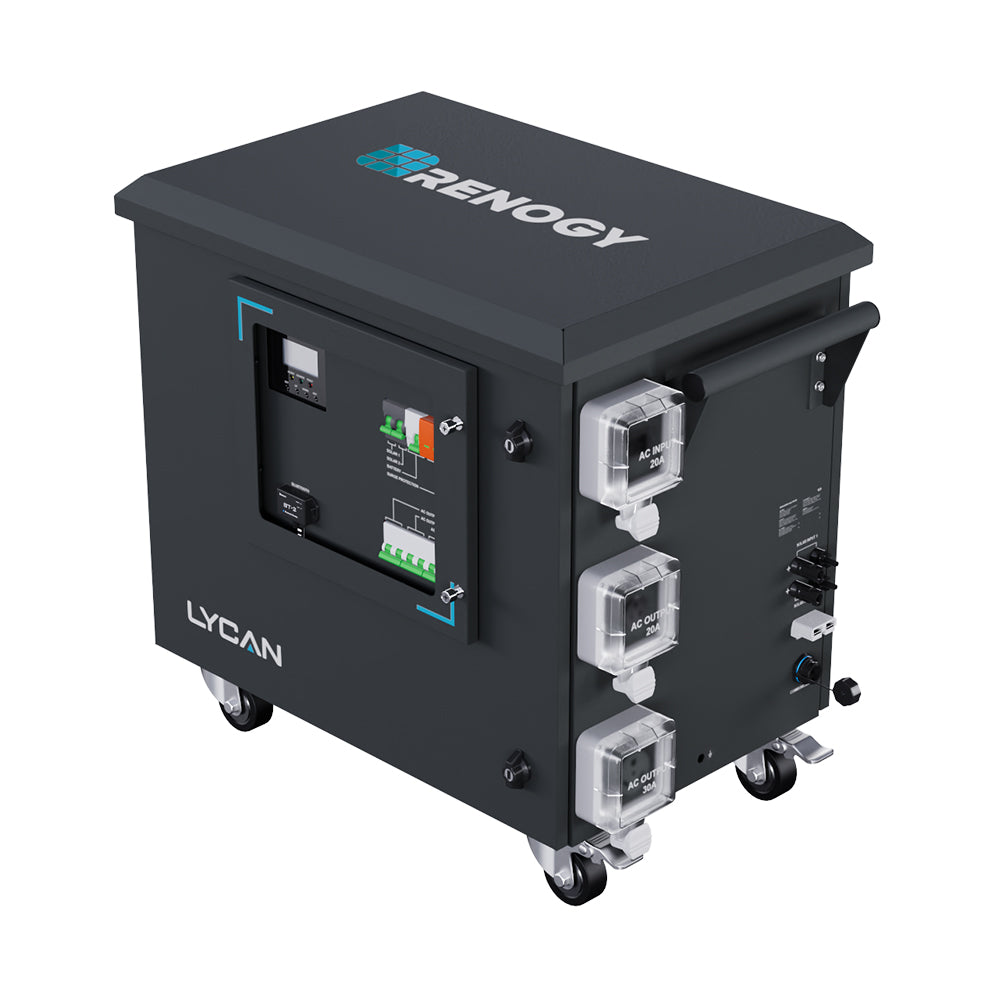
A panel array must satisfy three limits on the station's solar input: total watts, maximum voltage, and the connector type. The one that damages equipment is voltage. Panels wired in series add their voltages, and a panel's open circuit voltage (Voc) rises in cold weather, so an array that fits the limit on a mild afternoon can exceed it on a freezing bright morning. Stay under the station's maximum input voltage with margin (we plan at 80 percent of the limit), and the rest is just math.
Open circuit voltage, the number that matters most
Every panel lists a Voc, the voltage it produces with no load attached, measured at 25 degrees Celsius in a lab. Real panels in cold sun exceed it. The standard correction is to multiply Voc by about 1.25 for very cold conditions before comparing with the station's maximum input voltage. Two panels in series double the voltage. This is why the same four panels can be a fine array for one station and a damaging one for another, and why the station's spec sheet, not the panel's marketing, is the document that decides your wiring.
Series vs parallel, in plain terms
- Series (positive to negative, like train cars): voltages add, current stays the same. Higher voltage travels better over long cable runs and suits stations with high voltage input windows.
- Parallel (positives together, negatives together): currents add, voltage stays the same. Suits stations with low voltage windows and higher current limits, and one shaded panel drags down less of the array.
- The watt cap is separate. However you wire, the array's total watts cannot exceed the station's solar input watts. The BLUETTI Apex 300 accepts 800W, which is why our head to head pairs it with two 400W panels while its rivals take four.
A worked example, with the actual arithmetic
Take an example panel whose spec sheet lists an open circuit voltage of 24.6V. That is a realistic figure for a mid size panel, and the method below works with whatever number your panel's sheet actually shows.
| Wiring | Array Voc at 25C | Cold corrected (x 1.25) | Against a 60V input limit |
|---|---|---|---|
| One panel | 24.6 V | about 30.8 V | Comfortable |
| Two in series | 49.2 V | about 61.5 V | Over the limit on a cold bright morning. Do not wire it this way. |
| Two in parallel | 24.6 V | about 30.8 V | Comfortable, and the current doubles instead |
| Four in series | 98.4 V | about 123 V | Far over. This array needs a station with a much higher voltage window, or a series parallel split. |
Three lessons fall out of that one table. First, the same panels pass or fail purely on wiring, which is why compatibility is a property of the array, not the panel. Second, the cold correction is not pedantry: the series pair looks safe at 49.2V on paper and only fails after the correction, which is exactly the failure that happens on the first freezing sunny morning. Third, our planning rule adds one more cushion on top: we size arrays so the cold corrected voltage also stays near or under 80 percent of the station limit where the panel count allows it, because spec sheets round and mornings are colder than forecasts.
Series or parallel: the decision in one table
| Your situation | Usual answer | Why |
|---|---|---|
| Station has a high voltage input window and a long cable run to the panels | Series | Higher voltage loses less over distance and keeps current, and cable size, down |
| Station has a low voltage window (many portable class inputs) | Parallel | Voltage stays at one panel's level no matter how many panels you add |
| Part of the array is shaded part of the day | Parallel, or split strings | One shaded panel drags a series string down with it; parallel panels suffer alone |
| Array watts exceed the station's solar input watts either way | Neither. Remove panels. | The watt cap is independent of wiring; extra panels are clipped at best and a spec violation at worst |
Why our compatibility checker is not live yet
We are building a panel compatibility checker that does this math per model, and we are deliberately not launching it today. A checker is only as good as its spec database: maximum watts, voltage, and current for every station input, and Voc for every panel, verified model by model. A wrong answer from a tool like that can damage equipment, so the checker ships only after the database behind it is verified, starting with a short model list. Until then, this explainer plus the spec sheet for your exact station is the safe route, and it takes about five minutes.
Who should skip this
Skip the wiring education if you buy the station manufacturer's own matched panels and connect them exactly as the manual shows. Matched kits are engineered to land inside every limit. You pay more per watt for that certainty (see rigid vs folding), and for many buyers it is the right trade.
Your next step: size the array itself, in watts and panels.
How much solar do you need