Transfer switch vs extension cords
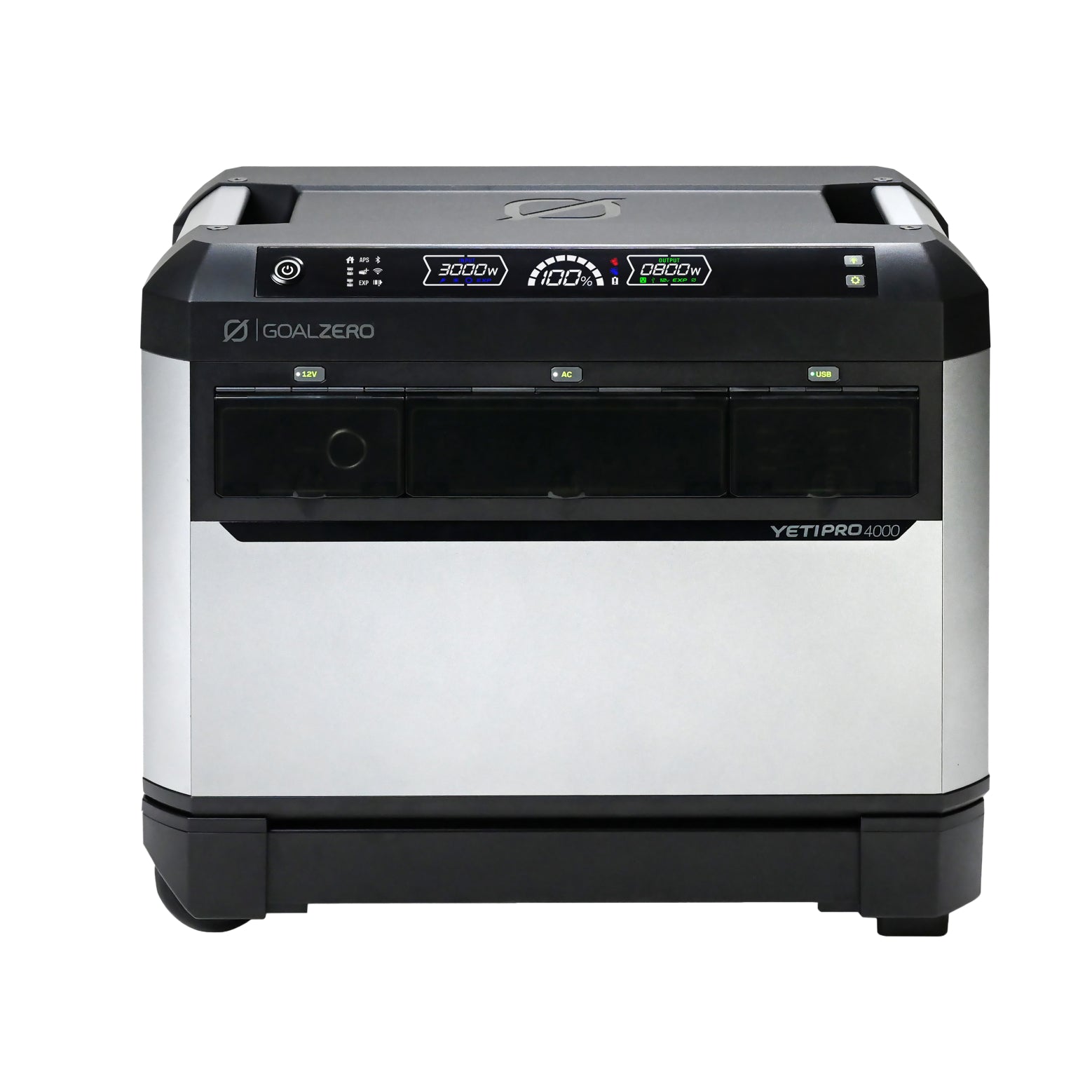
Both are legitimate; they serve different houses. Extension cords cost almost nothing, need no electrician, and run the fridge, freezer, lights, and router in any home including a rental. A transfer switch with an inlet box costs real money (the switch, the inlet, and a few hours of licensed electrician time) and repays it by powering hardwired loads a cord can never reach: the furnace blower, the well pump, the sump on its own circuit. Choose by your load list, not by what sounds more serious.
Extension cords, done right
- Use heavy gauge outdoor rated cords, as short as the layout allows, and never run a cord under a rug or through a doorway that will pinch it.
- One appliance per cord for anything with a motor or a heating element. Power strips are for lamps and chargers, not fridges.
- The station lives indoors, dry, and ventilated. Batteries are the one backup technology that is safe inside the living space; that is their advantage, so use it.
- What cords cannot do: any hardwired load. If heat in your house comes from a furnace with a blower wired into the panel, cords do not run it. This single fact decides the question for most northern homes.
Transfer switch or inlet, done right
An electrician installs a switch (or an interlock kit where code allows) and an outdoor inlet box, selects the circuits that matter, usually six to ten of them, and labels everything. In an outage you roll the station to the inlet, plug in one rated cable, flip the switch, and the chosen circuits behave normally. The furnace runs. The well pump runs. The sump runs on its own circuit without a cord across the basement floor.
Costs vary by region and panel condition, and any honest page in this category should refuse to print a single national number. Get two quotes, expect the electrician's time to rival the hardware cost, and treat a panel that needs other work as a separate project that an outage is not the moment to discover.
The one warning, stated once and clearly
Who should skip this
Skip the transfer switch if you rent, if your critical loads are all plug in appliances, or if you are buying the station for one season of construction work. Skip cords as your main plan if winter heat depends on a hardwired furnace; in a cold climate that is not a plan, it is a hope.
Your next step: the whole-home picks, ranked with the math shown.
See the whole-home roundup