
Anker SOLIX F3000 vs EcoFlow DELTA 3000 Gen4
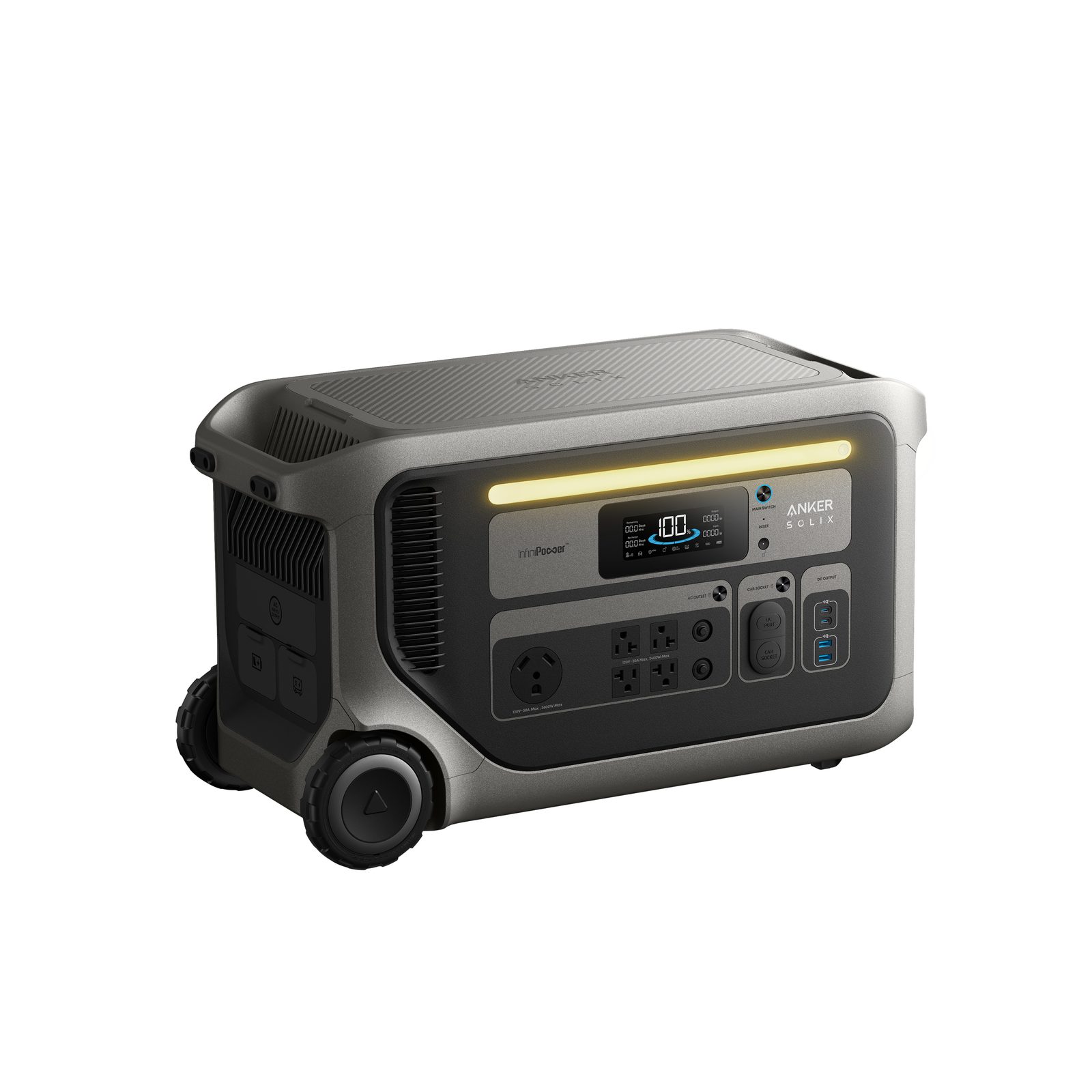
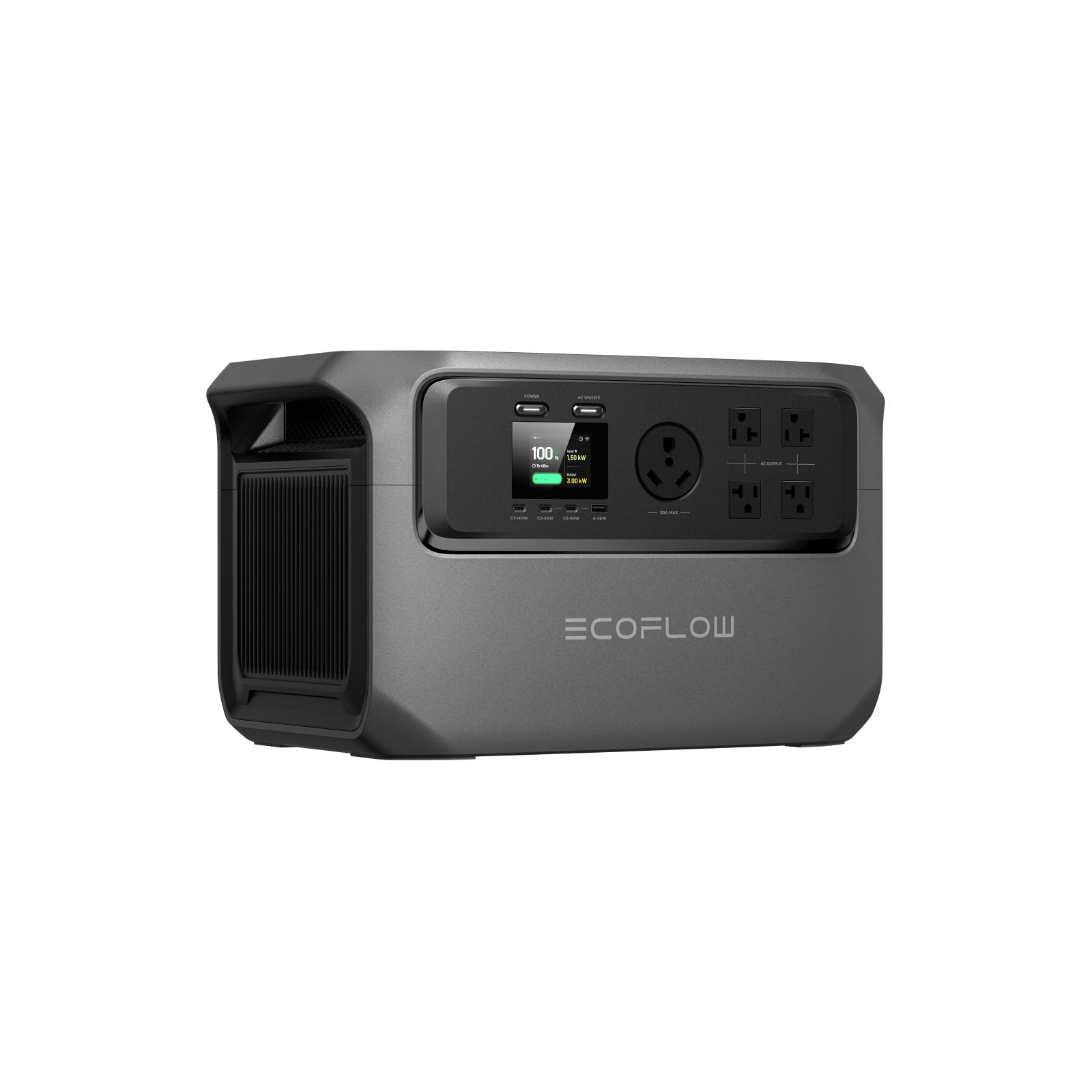
A comparison with a strange start: on paper these two are the same machine. Identical 3,072 rated watt hours (about 2,611 usable), identical 3,600 watts of steady output, identical 7,200 watt starting push. What separates them is everything around the spec tie. The EcoFlow DELTA 3000 Gen4 is $400 cheaper and 34 pounds lighter. The Anker SOLIX F3000 takes 2,400 watts of solar input against the EcoFlow's 1,000, so it refills more than twice as fast in the sun. If your outages end when the battery does, buy the EcoFlow and keep the $400. If your plan is to live on panels through day two, the Anker's wider doorway is the whole argument.
Start with usable capacity, and what it costs
Every station advertises its rated watt hours. What reaches your fridge is less, because the inverter (the part that turns battery power into normal outlet power) uses part of the battery on the way out. Planning on 85 percent of rated capacity is the honest rule, and it is the factor in every table on this site. Prices below are the box prices from our catalog check, at the seller named; the cost per usable watt hour table prices full systems with panels and tax for the big three.
| Anker SOLIX F3000 | EcoFlow DELTA 3000 Gen4 | |
|---|---|---|
| Rated capacity | 3,072 Wh | 3,072 Wh |
| Usable at 85% | 2,611 Wh | 2,611 Wh |
| Box price (checked, at Amazon / EcoFlow US) | $1,699.99 | $1,299 |
| Cost per usable watt hour | $0.65 | $0.50 |
Identical batteries mean identical hours: about 8.1 hours on the standard home list (322 watts average) and about 15.4 hours on the basement-and-food list (170 watts average), for both machines. Nothing in this comparison is about runtime per charge; it is about what happens on the next charge.
Output, starting push, and refill speed
Steady output is what a station can give without stopping; the starting push is the bigger burst it can hand a motor for the second it starts (a fridge needs about 1,200 watts to start, a 1/2 HP well pump about 3,000). Solar input is the widest doorway panels can refill through, and it decides day two more than battery size decides day one.
| Anker SOLIX F3000 | EcoFlow DELTA 3000 Gen4 | |
|---|---|---|
| Steady output (runs without stopping) | 3,600 W | 3,600 W |
| Starting push (surge, for motor starts) | 7,200 W | 7,200 W |
| Solar input, most it can take | 2,400 W | 1,000 W |
| Weight | 91.5 lb | 57.3 lb |
Same battery, same output: the refill decides
Run the day-two math, because it is the only math that separates them. A house spending the standard home list's 322 watts through a 10 hour night uses about 3,220 watt hours, more than either battery holds usable, so both houses wake up rationing. With 1,600 watts of panels in decent sun (about 5,400 watt hours of harvest), the Anker can actually accept the array's full push toward its 2,400 watt ceiling across the day; the EcoFlow's 1,000 watt cap turns the same panels away at the door once they pass it. Over a three day outage that doorway difference is worth more than the $400: it is the difference between a battery that recovers and one that only drains slower.
Now run the other scenario, the one most buyers actually live: outages of a few hours, a few times a year, recharged from the wall afterward. There the solar ceiling never matters, the batteries are identical, and the EcoFlow is the same backup for $400 less and two-thirds the weight. At 57.3 pounds against 91.5, it is also the one that gets carried to the basement, the campsite, and the neighbor's fridge without a negotiation.
Cost per usable watt hour says the same thing two ways: about $0.50 for the EcoFlow, about $0.65 for the Anker. The Anker's premium buys exactly one thing, solar headroom, and this page's verdict is simply: pay for it only if your plan uses it.
The verdict, by household
- Typical outages, wall recharge, sane budget: EcoFlow DELTA 3000 Gen4. Same battery and output, $400 less, far lighter.
- Multi-day outages with a real panel array: Anker SOLIX F3000. The 2,400 watt solar input is the deciding spec.
- Either way: both run the standard home list for about 8.1 hours per charge, and both clear its 3,402 watt starting target easily.
Still deciding against a third finalist? Tick a box and the compare bar at the bottom lines that unit up against anything else on the site:
Questions readers ask
The specs are identical. Why does one cost $400 more?
Because of the one spec that is not identical: solar input. The Anker SOLIX F3000 accepts up to 2,400 watts of panels; the EcoFlow DELTA 3000 Gen4 caps at 1,000 watts. In a long outage with panels up, the Anker refills more than twice as fast. Without panels in the plan, that headroom never gets used, and the EcoFlow is the same backup for less.
How long do they run a normal home list?
The same, since the batteries match: about 8.1 hours on this site's standard home list (fridge, freezer, well pump, lights, phones, router, averaging 322 watts), and about 15.4 hours on the lighter basement-and-food list (fridge, freezer, sump pump, averaging 170 watts).
Which is easier to move?
The EcoFlow, and it is not close: 57.3 pounds against the Anker's 91.5. Both are two-hand carries, but the EcoFlow is the one a single adult moves between rooms or loads into a car without help.
Who should skip this
Skip both if your list is only a fridge and the basics: the 1,000 watt hour class covers that for half the money. Skip the Anker specifically if you will never connect more than 1,000 watts of panels; its one advantage would sit unused for the life of the machine.
Plain links to the manufacturer. We may earn a commission on purchases in the future; today these links are not tracked.
Your next step: run your own loads and see the hours on both, not just the specs.
Open the runtime calculator