Michigan winter outage guide
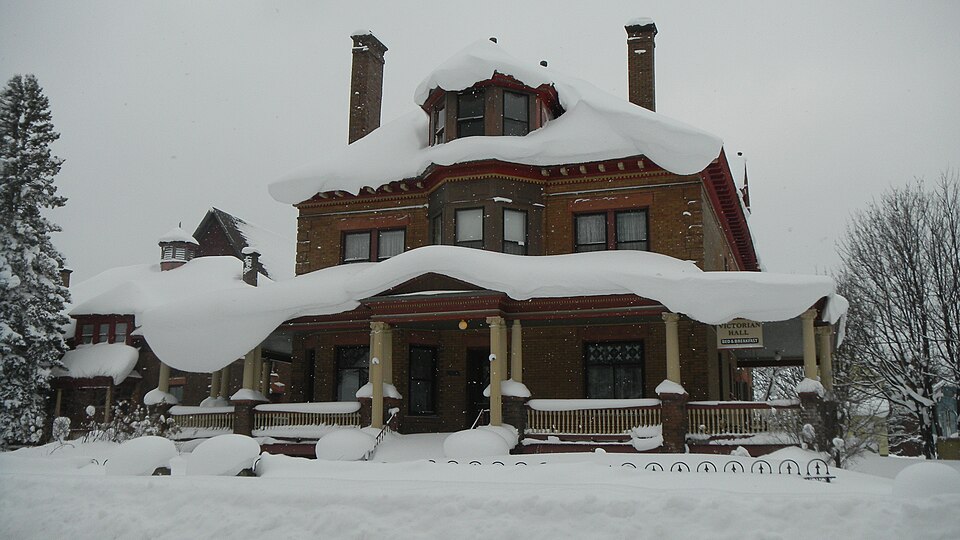
Michigan runs two winter outage regimes at once. In the southeast it is ice: on February 22, 2023, a storm laid a quarter to a half inch of ice along and south of I-69, and DTE Energy reported nearly 3,000 downed wires and over 500,000 customers without power; DTE's president said the company had not had an ice storm in 50 years that hit its infrastructure like that one. In the north it is lake-effect snow and wind, feet of it at a time. Detroit's January normals (National Weather Service, 1991 to 2020) are a high of 32.3 degrees F and a low of 19.2, with 14 inches of snow in a normal January. Two utilities dominate: DTE (about 2.3 million electricity customers in the southeast) and Consumers Energy (about 1.8 million homes and businesses across the rest of the Lower Peninsula), with Indiana Michigan Power in the southwest corner and cooperatives and municipal utilities elsewhere. The home drill is the standard winter list (fridge, freezer, furnace fan): 770 watts at once, a starting push of about 1,850 watts, and about 340 watts on average.
The Michigan winter you are actually planning for
Detroit's normals set the southeast's expectations: January high 32.3 degrees F, low 19.2, about 14 inches of snow in January and 35.4 across the winter, and an average of 3.4 days each winter with lows at or below zero. The northern story is lake effect: when arctic air crosses the open lakes, snow falls by the foot. The National Weather Service's Gaylord office, summarizing the December 2022 blizzard, recorded 1 to 2 feet in northwest Lower Michigan and around 3 feet in Sault Ste. Marie, with winds gusting 45 to 55 mph, and 2,300 customers out at the peak in eastern Upper Michigan. For backup power the translation is: the southeast plans for ice and multi-day repairs, the north plans for snow load, wind, and roads that keep crews and residents alike in place.
The US Department of Energy's Michigan risk profile adds the statistic that explains the state's outage reputation: winter storm and extreme cold is Michigan's second most common natural hazard, occurring on average once every 5.3 days during the October to March stretch (1996 to 2014 data). Winter outages here are not an edge case; they are a season.
What actually takes Michigan power down
Trees and weather, together. The Department of Energy's profile, from utility-reported data, names "Weather/Falling Trees" as the leading cause of Michigan electric outages in 2008 to 2013, and severe thunderstorms as the leading cause of transmission outages. Consumers Energy's own outage page tells the everyday version: severe weather is usually the reason, and in any weather a tree can fall on lines, a vehicle can strike a pole, and equipment can fail. A heavily wooded state with overhead lines has a tree problem in every season.
Ice, past the quarter-inch line. Indiana Michigan Power warns that ice accumulations over a quarter inch can weigh down trees and power lines and cause outages. February 22, 2023 is the proof at scale: the National Weather Service's Detroit storm data records widespread ice of a quarter to a half inch along and south of I-69 (parts of Washtenaw County exceeded a half inch), with DTE reporting nearly 3,000 downed wires and over 500,000 customers out. The Associated Press, counting at a different moment, reported more than 600,000 DTE customers and about 237,000 Consumers Energy customers lost power. Treat the figures as reported counts from a moving event; the settled fact is that a single ice day out-damaged whole Michigan winters.
Wind, without any storm name. On March 8, 2017, a non-thunderstorm wind event gusted over 60 mph across the state (68 mph at Saginaw and Detroit Metro Airport), and the Weather Service's storm data records approximately 800,000 DTE customers and approximately 300,000 Consumers Energy customers affected, with many areas out for several days. No ice, no snow: just wind and trees. It is the year-round argument for the same winter-sized setup.
Your power company, and how to check an outage
- DTE Energy (southeast Michigan, including Detroit): about 2.3 million electricity customers. The Outage Center is at outage.dteenergy.com: report an outage, check status, and view the outage map, which can be searched by address or filtered by ZIP code or county. Phone: 800-477-4747.
- Consumers Energy (most of the rest of the Lower Peninsula): about 1.8 million homes and businesses. Its Outage Center and interactive outage map (consumersenergy.com) show the extent of outages statewide with estimated restoration times. Report or call: 800-477-5050.
- Indiana Michigan Power (the southwest corner): outage map at IndianaMichiganPower.com/OutageMap, plus the I&M app and text or email alerts; phone 1-800-311-4634.
- Cooperatives and municipal utilities serve much of the Upper Peninsula and rural Lower Michigan. Your own utility's map is the timeline that describes your street, especially in lake-effect country, where conditions change by the mile.
- State guidance: MIReady (michigan.gov/miready), the state's preparedness hub, carries the winter power outage tips summarized below.
The Michigan drill, on the clocks that matter
MIReady's winter outage guidance is built for this state's two regimes. Before: keep sufficient heating fuel and an emergency heating source (a gas fireplace or wood stove) able to keep at least one room livable and well ventilated, insulate and weather-strip, know how to shut off your water valves, and, if your water depends on a well pump, fill the bathtub and spare containers while you still have pressure. Never thaw a frozen pipe with a torch or open flame. During: dress in loose warm layers and a hat, unplug sensitive electronics to protect them from voltage irregularities when power returns, and run any fuel generator outside only, exhaust facing away from the home. After: treat every downed or hanging wire as live, and remember they can be hidden by snowdrifts, trees, or debris; stay 25 feet away and call your utility. Check on neighbors, especially seniors, and never call 911 to ask about an outage. The site's clocks ride on top: food (a closed fridge about 4 hours, a full freezer about 48, per USDA guidance), the furnace fan first in a cooling house, and exposed pipes at risk within about six hours at 20 degrees F or below. Full drill: the Midwest winter storm checklist. Kit: the national preparation checklist. Sizing: the sizing guide.
Questions readers ask
Who provides electricity in Michigan, and where do I check my outage?
DTE Energy (about 2.3 million electricity customers in the southeast; Outage Center at outage.dteenergy.com, phone 800-477-4747) and Consumers Energy (about 1.8 million homes and businesses across the rest of the Lower Peninsula; outage map at consumersenergy.com, phone 800-477-5050) are the two largest. Indiana Michigan Power serves the southwest corner (map at IndianaMichiganPower.com/OutageMap, 1-800-311-4634), and cooperatives and municipal utilities serve much of the rest.
What happened in Michigan's February 2023 ice storm?
On February 22, 2023, a major winter storm laid a quarter to a half inch of ice along and south of I-69, with parts of Washtenaw County over a half inch, per National Weather Service storm data. DTE reported nearly 3,000 downed wires and over 500,000 customers without power; the Associated Press reported more than 600,000 DTE customers and about 237,000 Consumers Energy customers out. DTE's president said no ice storm in 50 years had hit its infrastructure like that one.
How cold and snowy is Detroit in January?
By the National Weather Service's 1991 to 2020 normals: a normal high of 32.3 degrees F, a normal low of 19.2, about 14 inches of snow in January and 35.4 inches across the winter, and an average of 3.4 days per winter with lows at or below zero. Northern Michigan adds lake-effect snow on top of similar cold, measured in feet per storm rather than inches.
Who should skip this
Skip the state detail if your Michigan home has a standby generator that starts by itself; your winter work is the kit and the food clock on the national checklist. Skip the lake-effect sections in the southeast and the ice sections in the Upper Peninsula; the sizing math is the same in both peninsulas.
Your next step: run the winter list (fridge, freezer, furnace fan) against every battery we cover.
Open the calculator with the winter list ticked