
EcoFlow DELTA Pro 3 vs Anker SOLIX F3800 Plus
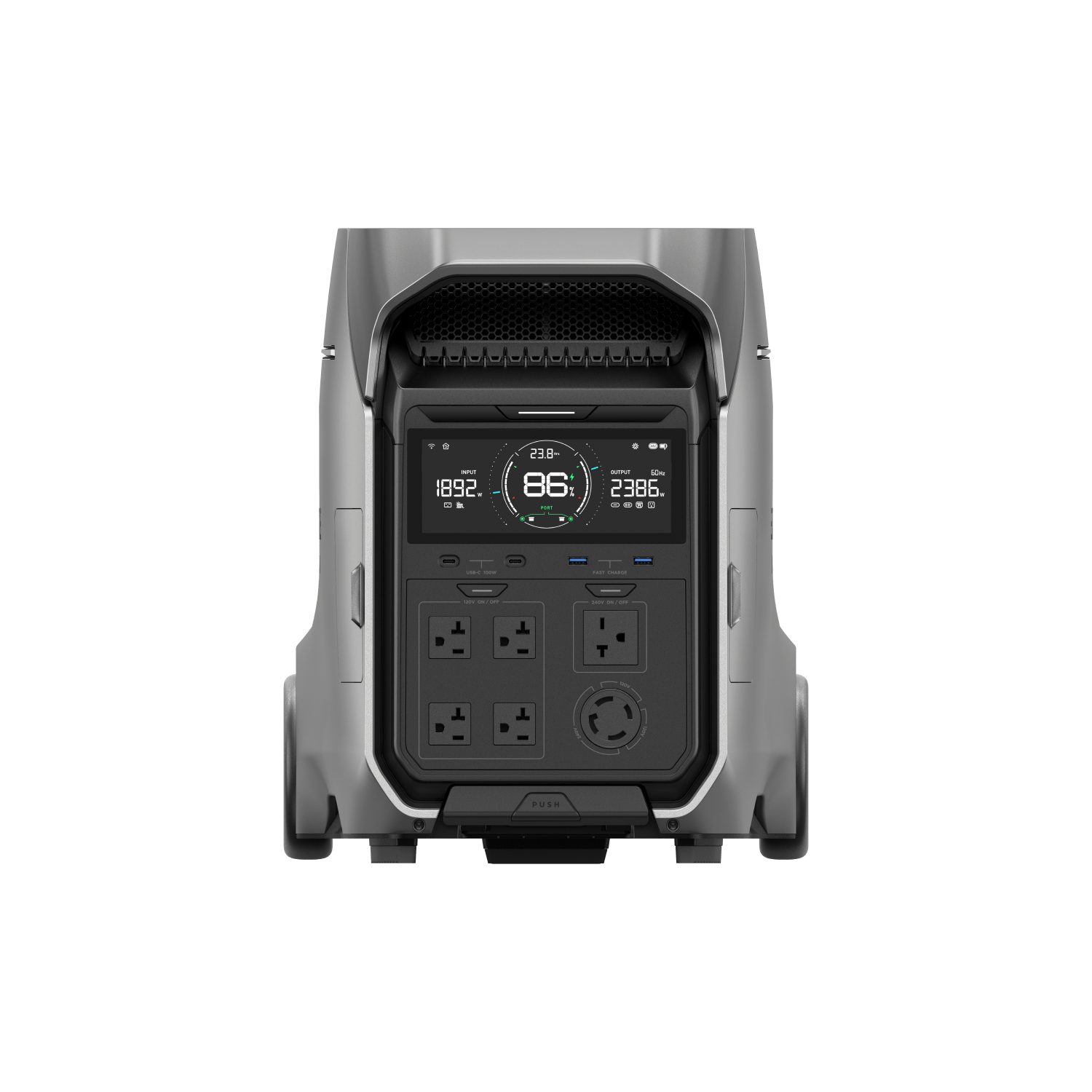
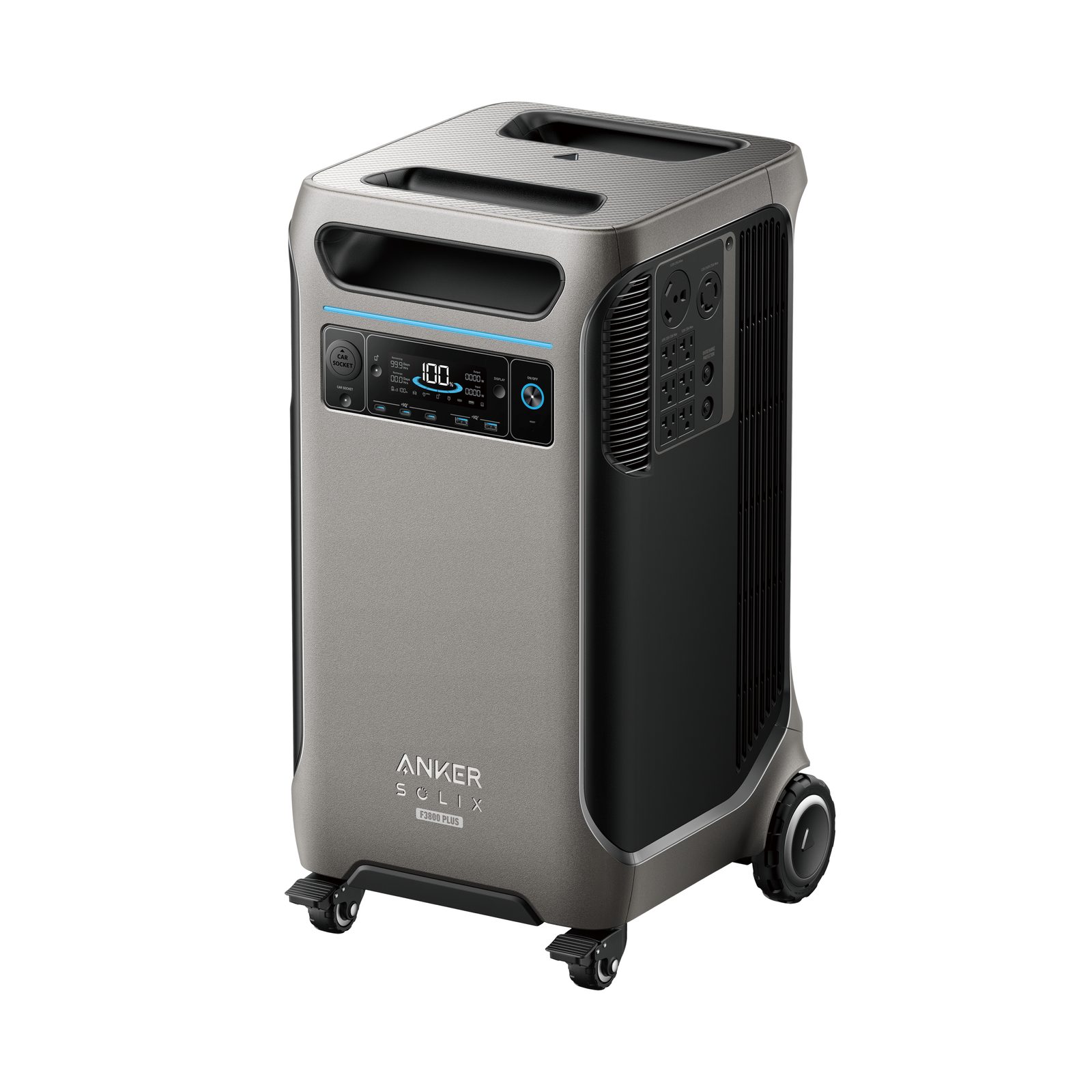
These are the two halves of our three-way head to head, alone together. The EcoFlow DELTA Pro 3 is the bigger, lighter battery: 4,096 rated watt hours (about 3,482 usable), a published 8,000 watt starting push, and 113.5 pounds. The Anker SOLIX F3800 Plus is the stronger plug: 6,000 watts of steady output against the EcoFlow's 4,000, the widest solar input of the pair (3,200 watts), and a $200 lower box price, paid for with a smaller battery (about 3,264 usable watt hours) and 23 more pounds. Cost per usable watt hour is a dead tie at about $0.80, so this choice is not about value. It is about which limit your house hits first: hours, or output.
Start with usable capacity, and what it costs
Every station advertises its rated watt hours. What reaches your fridge is less, because the inverter (the part that turns battery power into normal outlet power) uses part of the battery on the way out. Planning on 85 percent of rated capacity is the honest rule, and it is the factor in every table on this site. Prices below are the box prices from our catalog check, at the seller named; the cost per usable watt hour table prices full systems with panels and tax for the big three.
| EcoFlow DELTA Pro 3 | Anker SOLIX F3800 Plus | |
|---|---|---|
| Rated capacity | 4,096 Wh | 3,840 Wh |
| Usable at 85% | 3,482 Wh | 3,264 Wh |
| Box price (checked, at EcoFlow US / Anker SOLIX US) | $2,799 | $2,599.99 |
| Cost per usable watt hour | $0.80 | $0.80 |
On this site's standard home list (fridge, freezer, well pump, two sets of lights, two phones, and the router, averaging 322 watts), the DELTA Pro 3's usable battery lasts about 10.8 hours and the F3800 Plus's about 10.1 hours. That gap, about 40 minutes, is the whole capacity story between them; everything else in this comparison is about output and refill.
Output, starting push, and refill speed
Steady output is what a station can give without stopping; the starting push is the bigger burst it can hand a motor for the second it starts (a fridge needs about 1,200 watts to start, a 1/2 HP well pump about 3,000). Solar input is the widest doorway panels can refill through, and it decides day two more than battery size decides day one.
| EcoFlow DELTA Pro 3 | Anker SOLIX F3800 Plus | |
|---|---|---|
| Steady output (runs without stopping) | 4,000 W | 6,000 W |
| Starting push (surge, for motor starts) | 8,000 W | Not in our checked figures |
| Solar input, most it can take | 2,600 W | 3,200 W |
| Weight | 113.5 lb | 136.7 lb |
Where the two designs actually differ
Start with the loads that separate them. A 240 volt well pump, a furnace fan, and kitchen circuits starting in the same minute is an output problem, and the Anker's 6,000 watt steady output (with native split phase, meaning it makes both kinds of house power from one box, so it can feed a transfer switch and run 240 volt loads) is built for exactly that minute. The EcoFlow is also a 240 volt whole-home machine, and its 4,000 watts covers most homes' real lists; the full sizing guide shows how few lists pass 4,000 watts once the dryer is honestly left off.
Now the other direction: a long outage is an hours problem, and hours are battery. The EcoFlow holds about 218 more usable watt hours and weighs less while doing it, and on the standard home list that is the difference between about 10.8 hours and about 10.1. Its published 8,000 watt starting push also means this site's calculator can vouch for it against any motor on the list; the F3800 Plus publishes no surge figure in the spec lines we verified, so our calculator never counts it as a fit where a surge has to be proven, even though its steady output is the higher of the two. That is a paperwork gap, not a capability claim, and it is stated here the same way the catalog states it.
Refill is the third axis: the Anker accepts up to 3,200 watts of solar against the EcoFlow's 2,600, so on a sunny day two the Anker refills faster. Both dwarf the 800 watt class ceilings that strand smaller stations, and both pair with four 400 watt panels without wasting any.
The verdict, by household
- Longest night, simplest story: EcoFlow DELTA Pro 3. The bigger usable battery, the published surge, and less weight to move.
- Heavy 240 volt loads starting together: Anker SOLIX F3800 Plus. The 6,000 watt output stage is the reason it exists.
- Fastest solar recovery: Anker SOLIX F3800 Plus, by 600 watts of input headroom.
Still deciding against a third finalist? Tick a box and the compare bar at the bottom lines that unit up against anything else on the site:
Questions readers ask
Which one runs a house longer, the DELTA Pro 3 or the F3800 Plus?
The DELTA Pro 3, by a little. On this site's standard home list (fridge, freezer, well pump, lights, phones, router, averaging 322 watts), its about 3,482 usable watt hours last about 10.8 hours against the F3800 Plus's about 10.1 hours from about 3,264 usable watt hours. Solar refilling during the day can flip the result in a long outage, because the Anker accepts panels faster.
Which is the better value?
On the fairest single number they tie: both work out to about $0.80 per usable watt hour at their checked box prices ($2,799 for the EcoFlow, $2,599.99 for the Anker). The Anker is the cheaper box with the stronger output; the EcoFlow is the bigger battery. Value here depends on which of those your house needs, which is why the verdict above is split by household instead of naming one winner.
Can both of them feed a house panel?
Yes. Both are 240 volt whole-home class stations that can feed chosen circuits through an inlet box and a transfer switch or interlock, the setup in our house connection guide. Neither ever connects through a wall outlet; that backfeeding route is dangerous and illegal in most places.
Who should skip this
Skip both if your list is a fridge, lights, and phones: the 1,000 to 2,000 watt hour class does that job for a third of the money (see the C1000 Gen 2 vs DELTA 3 Plus comparison). Skip both, too, if you need days of unattended backup; that is a standby generator's job, and no battery in this class pretends otherwise.
Plain links to the manufacturer. We may earn a commission on purchases in the future; today these links are not tracked.
Your next step: run your own loads and see the hours on both, not just the specs.
Open the runtime calculator