
Best whole-home battery system, scored
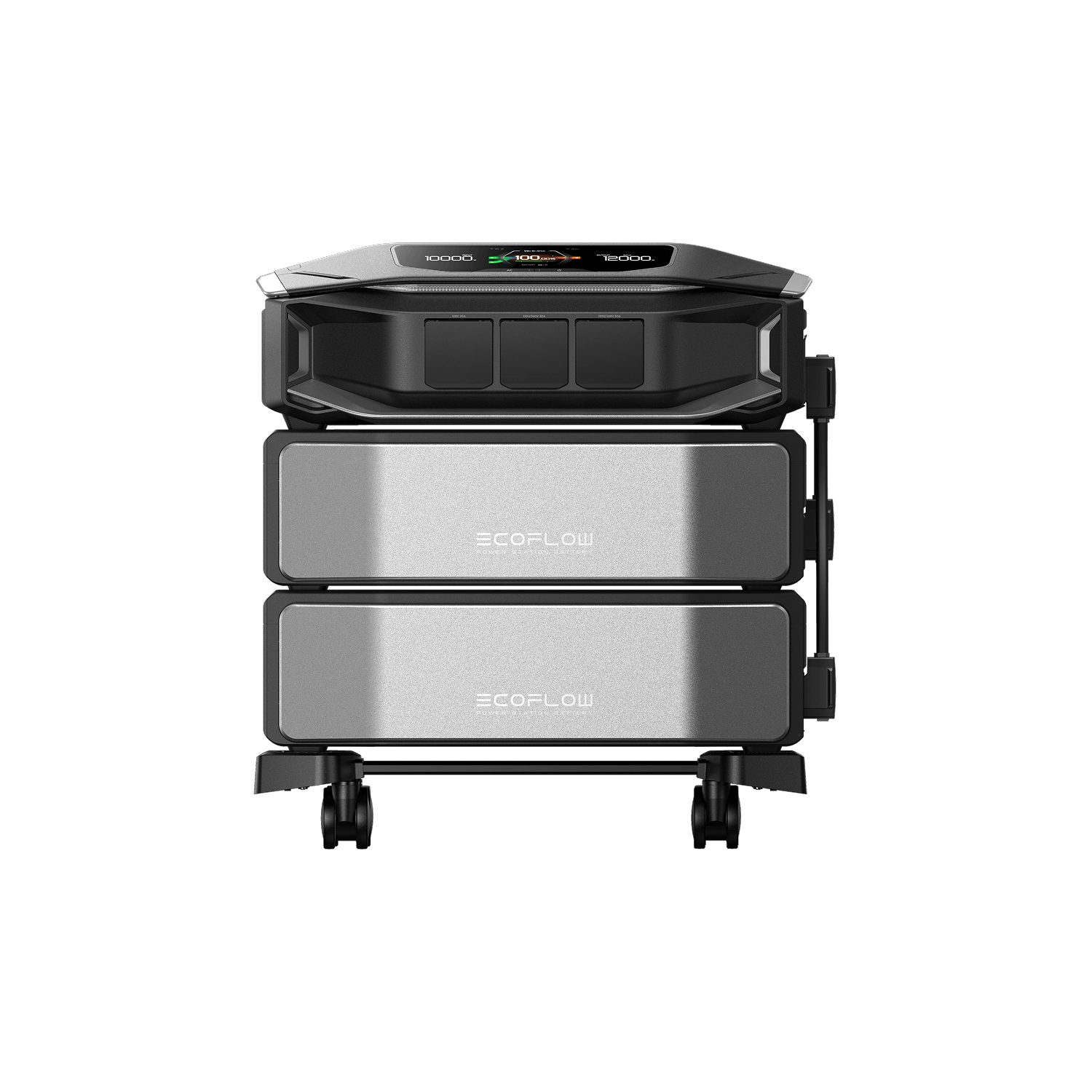
The EcoFlow DELTA Pro Ultra X is our whole-home battery pick, with a score of 89.3 out of 100, the largest winning margin on any of our picks pages. It stores 10,445 usable watt hours (what you can actually spend, about 85 percent of the printed size), puts out 12,000 watts, and takes up to 10,000 watts of solar input, so a big roof array genuinely refills it. The runner-up is its own smaller sibling, the DELTA Pro Ultra at 40.7: half the usable battery and output for $4,199. The gap between first and second is the story of this category right now. One teaching point before the details: a whole home needs watts (how much at once) as well as watt hours (how long). The Goal Zero Yeti 6000X stores a big 5,160 usable watt hours but outputs only 2,000 watts, which caps it for whole-home duty no matter how big its battery is.
How this page scored the systems
The pool is battery systems: the class that wires into a home panel (through a transfer switch or a smart panel) and runs chosen circuits, or the whole house, through an outage. Single-box stations compete on the home backup page instead. Scoring uses the site's published method at system scale: usable watt hours, output, solar input headroom, and price per usable watt hour, with expansion evidence counted only where a manufacturer page verifies it.
Scores were computed on November 10, 2026 from the prices in our catalog that morning. Prices in this category move weekly, sometimes daily, so each pick below also carries a price check line from the same day. A moved price can narrow a gap; it does not quietly rewrite a score after the fact. When we re-score, the date on this page moves.
The winner: EcoFlow DELTA Pro Ultra X (score 89.3)
| Figure | EcoFlow DELTA Pro Ultra X |
|---|---|
| Battery you can use (85% of 12,288 Wh) | 10,445 Wh |
| Power without stopping | 12,000 W |
| Solar input | 10,000 W |
| Price when scored | $7,999 |
| Price per usable watt hour | $0.77 |
Why it wins: it tops every factor in the pool at once. 12,000 watts runs a well pump, a furnace, a fridge, and an electric water heater in the same minute. 10,445 usable watt hours is roughly a day of careful whole-home use, and 10,000 watts of solar input is the difference between a battery that survives day two and one that only survives day one. Systems at this level need a transfer switch or smart panel and, in most places, an electrician; budget for the install when you budget for the box. Our whole-home backup explainer walks through what the install involves.
Price check, November 10, 2026: EcoFlow's page showed the base setup (one inverter and two batteries) at $7,899, a hundred under the scored price. The order on this page does not move.
Choose where to buy: EcoFlow DELTA Pro Ultra X
Plain links, not tracked. We may earn a commission on purchases in the future; today these links earn us nothing.
Runner-up: EcoFlow DELTA Pro Ultra (score 40.7)
The original Ultra is half the system: 5,222 usable watt hours, 7,200W of output, and 5,600W of solar input, for $4,199 ($0.80 per usable watt hour). It expands to 30 kWh for a single unit and 90 kWh as a system (manufacturer figures), the deepest expansion path in the pool, so it is the rational buy for a house that wants to start at critical circuits and grow. It scores a distant second because the Ultra X roughly doubles it on every factor at less than double the price.
Price check, November 10, 2026: EcoFlow's page showed $4,199, matching the scored price, with the base setup out of stock at that moment. Home Depot sells it as a kit; the kit button below is that listing.
Choose where to buy: EcoFlow DELTA Pro Ultra
Plain links, not tracked. We may earn a commission on purchases in the future; today these links earn us nothing.
Watts vs watt hours: the mistake this category punishes
Two numbers decide whole-home backup, and marketing prints the wrong one bigger. Watt hours say how long: the size of the tank. Watts say how much at once: the width of the pipe. A house starting a well pump while the fridge and furnace run needs a wide pipe for a few seconds, every time, or the system shuts off with a full tank.
The Goal Zero Yeti 6000X is the standing example. Its battery is genuinely big, 5,160 usable watt hours, but its output is 2,000 watts, about one kitchen circuit. As a long-running battery for a fridge and lights it is fine. As a whole-home system it cannot start the loads a whole home starts, so it is not scored on this page no matter how the battery math looks. When you shop this class, read the output line first and the capacity line second.
The rest of the site
More scored picks
Every category below was scored the same way: the same published method, the same catalog, the same day. Or skip the reading and see the deals page, which lines up the checked prices and the store links for the models we cover.
- Best for home backup
- Best budget power station
- Best for camping
- Best compact power station
- Best fuel generator for long outages
Who should skip this
Skip this class if your panel cannot take a transfer switch or smart panel install, if your outages are a few hours a year (a single-box station covers that for a quarter of the money), or if you need a week of unattended backup, where a standby fuel generator is still the honest answer. And skip it if the plan depends on a tax credit you have not verified; our 2026 incentives guide covers what is actually claimable.
Your next step: run your own loads and get hours, not guesses.
Open the runtime calculator