
EcoFlow DELTA 2 vs BLUETTI AC180
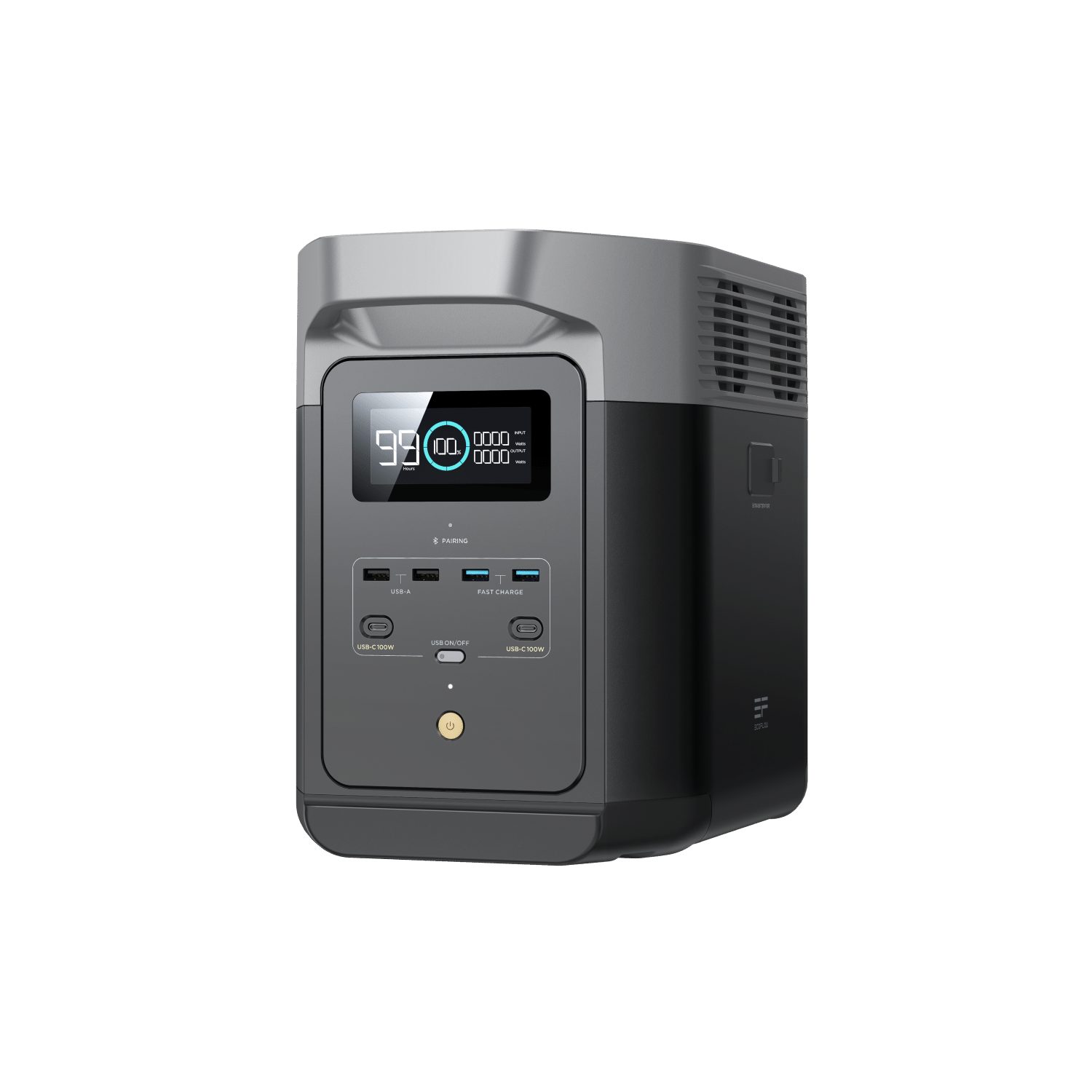
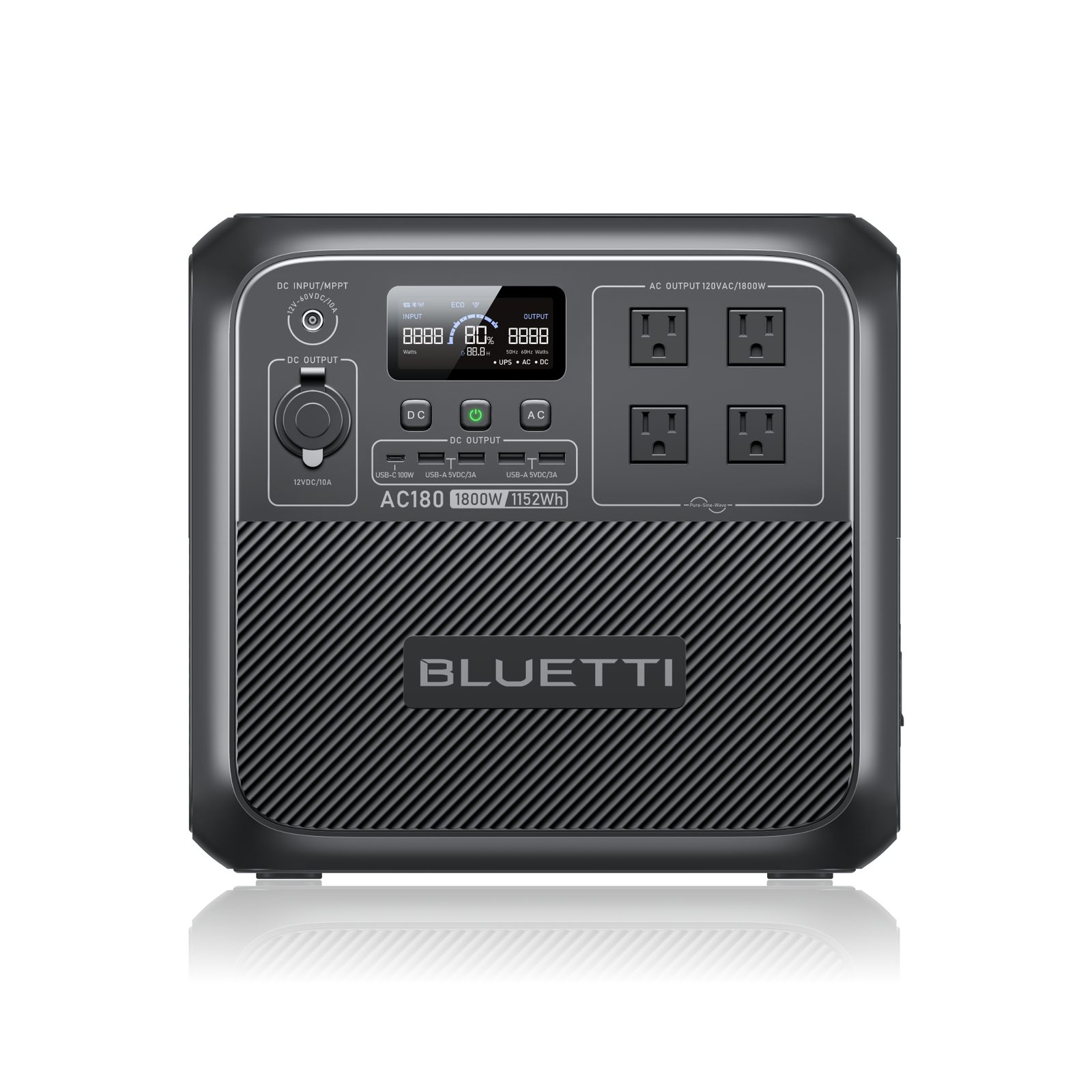
The budget 1,000 watt hour class, settled by one trade. The BLUETTI AC180 carries the bigger battery: 1,152 rated watt hours against the EcoFlow DELTA 2's 1,024, which is about 979 usable watt hours against about 870, roughly two extra hours on a fridge. It costs $50 more ($499 vs $449) and weighs 8.3 pounds more (35.3 vs 27.0). Everything else is a tie: same 1,800 watts of steady output, same 2,700 watt starting push, same 500 watt solar ceiling, and a near-tie on cost per usable watt hour (about $0.51 BLUETTI, about $0.52 EcoFlow). Staying put, take the BLUETTI's hours. Moving around, take the EcoFlow's back.
Start with usable capacity, and what it costs
Every station advertises its rated watt hours. What reaches your fridge is less, because the inverter (the part that turns battery power into normal outlet power) uses part of the battery on the way out. Planning on 85 percent of rated capacity is the honest rule, and it is the factor in every table on this site. Prices below are the box prices from our catalog check, at the seller named; the cost per usable watt hour table prices full systems with panels and tax for the big three.
| EcoFlow DELTA 2 | BLUETTI AC180 | |
|---|---|---|
| Rated capacity | 1,024 Wh | 1,152 Wh |
| Usable at 85% | 870 Wh | 979 Wh |
| Box price (checked, at EcoFlow US / bluettipower.com) | $449 | $499 |
| Cost per usable watt hour | $0.52 | $0.51 |
The battery gap is the runtime gap: about 16.3 vs about 14.5 hours on a fridge alone, and about 7.2 vs about 6.4 hours on the fridge, lights, phones, and router list. On this site's standard home list neither belongs (their starting push cannot prove the well pump's start), which is itself a sizing lesson from the sizing guide: the start decides first, the hours second.
Output, starting push, and refill speed
Steady output is what a station can give without stopping; the starting push is the bigger burst it can hand a motor for the second it starts (a fridge needs about 1,200 watts to start, a 1/2 HP well pump about 3,000). Solar input is the widest doorway panels can refill through, and it decides day two more than battery size decides day one.
| EcoFlow DELTA 2 | BLUETTI AC180 | |
|---|---|---|
| Steady output (runs without stopping) | 1,800 W | 1,800 W |
| Starting push (surge, for motor starts) | 2,700 W | 2,700 W |
| Solar input, most it can take | 500 W | 500 W |
| Weight | 27.0 lb | 35.3 lb |
Two extra hours, eight extra pounds
The AC180's extra 128 rated watt hours sound small until they are hours: on a fridge alone (about 60 watts average) the BLUETTI runs about 16.3 hours against the EcoFlow's about 14.5, and on the fridge-and-basics list about 7.2 hours against about 6.4. In outage terms, that is the difference between a fridge that makes it to the morning crew's first restoration estimate and one that gets there with the door still cold. It is a real edge, bought honestly with size.
The EcoFlow's edge is the life around the outage. At 27 pounds it is the one that goes upstairs, into the car, and out to the yard without a second thought, and its $449 price is the lowest in this comparison. Both machines are the previous generation of their lines, which is exactly why they cost what the newer 1,000 watt hour boxes (the C1000 Gen 2 and DELTA 3 Plus) charge $500 to $719 to beat on speed and surge rather than on hours.
Neither machine's 500 watt solar ceiling is a day-two plan on its own; it returns roughly 1,700 watt hours on a decent day, enough to hold the fridge-and-basics list (about 136 watts average) near even, not enough to refill from empty while the list runs. Buy these as one-charge insurance with a solar courtesy, and they are both honest tools.
The verdict, by household
- Stationary home backup, longest fridge hours per dollar: BLUETTI AC180. The bigger battery wins the outage itself.
- Carried between home, car, and campsite: EcoFlow DELTA 2. Eight pounds is the difference between grabbed and left behind.
- Either way: both clear a fridge's start and a 1/3 HP sump pump's start on published figures; neither is a 1/2 HP pump answer (2,700 watt push against a 3,000 watt start).
Still deciding against a third finalist? Tick a box and the compare bar at the bottom lines that unit up against anything else on the site:
Questions readers ask
Which runs a fridge longer, the DELTA 2 or the AC180?
The BLUETTI AC180: about 16.3 hours against about 14.5, because its battery is bigger (1,152 vs 1,024 rated watt hours, about 979 vs about 870 usable). On the fuller fridge, lights, phones, and router list the gap holds at about 7.2 vs about 6.4 hours.
Can either of them run a sump pump?
A 1/3 HP pump, yes: it starts at about 2,000 watts, under both stations' published 2,700 watt starting push, and runs at about 800 watts, under their 1,800 watt steady output. A 1/2 HP pump starts at about 3,000 watts, over both pushes, so neither is the honest pick for that pump; the sump checker shows the stations that clear it.
Are these too old to buy?
They are the previous generation of their lines, and that is their value story: the hours per dollar (about $0.51 to $0.52 per usable watt hour) beat the newer boxes in this size class, while the newer boxes win on solar speed and starting push. For a fridge-and-lights outage plan, the older pair is enough tool. For panel-heavy or pump-heavy plans, the newer class earns its premium.
Who should skip this
Skip both if a 1/2 HP sump pump or a well pump is on your must-run list: their 2,700 watt starting push does not clear a 3,000 watt start, and no battery size fixes a start it cannot make. The 2,000 watt hour class is the step up.
Plain links to the manufacturer. We may earn a commission on purchases in the future; today these links are not tracked.
Your next step: run your own loads and see the hours on both, not just the specs.
Open the runtime calculator