Illinois winter outage guide
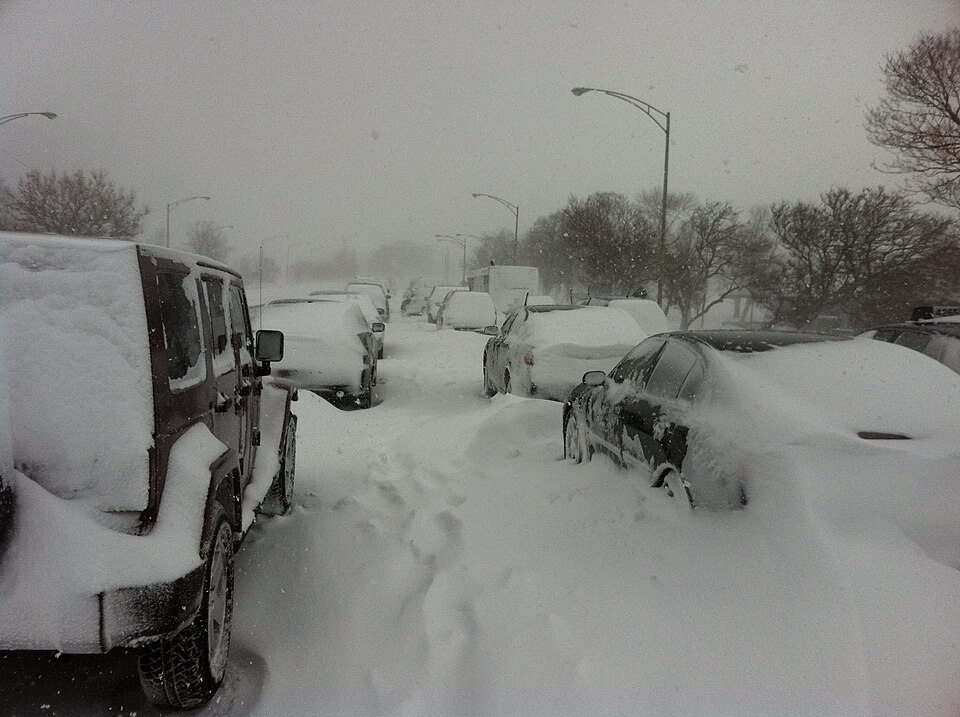
Illinois is two winter states sharing a name. The north gets Chicago cold (a January average of 25.2 degrees F at O'Hare, with about 11 inches of snow in a normal January, per the National Weather Service). The south gets ice: the January 2025 storm laid a quarter to three quarters of an inch of ice on southern Illinois, the kind that takes lines down by weight. Either way, the home drill is the same winter list this site uses everywhere: fridge, freezer, and the furnace fan (your gas furnace's electric blower), which needs 770 watts at once, a starting push of about 1,850 watts, and about 340 watts on average. Most Illinois homes are ComEd homes (more than 4 million customers in the north, about 70 percent of the state's population); downstate, Ameren Illinois and electric cooperatives cover most of the rest. Report and track through your own utility first, then work the clocks in the winter outage guide.
The Illinois winter you are actually planning for
Chicago's 1991 to 2020 climate normals (the National Weather Service's 30 year averages for O'Hare) put January at a normal high of 31.6 degrees F and a normal low of 18.8, with about 11.3 inches of snow in the month and 38.4 inches across a normal year. January averages 16.5 days with highs at or below freezing and 3.5 days with lows at or below zero. Rockford, an hour and a half northwest, runs colder: a January average of 21.8 degrees. Translation for backup power: a Chicago outage in January is a heating problem inside a day, and a downstate outage is the same problem plus ice.
Ready Illinois, the state's own preparedness site, lists the winter hazards plainly: blizzards, heavy snows, low temperatures, freezing rain, or sleet, and notes that winter storms can isolate a household through power outages and blocked roads at the same time. Its heating guidance is worth taping to the fridge: where you can, keep one room heated to 68 to 70 degrees, and use warming centers, public facilities, and heated stores when the house cannot hold that line.
What actually takes Illinois power down
Ice downstate. On January 5, 2025, a major winter storm crossed the southern Midwest: the National Weather Service at Paducah recorded 0.25 to 0.75 inch of ice in the hardest-hit areas and 4 to 8 inches of snow and sleet, with heavy snow and ice plus persistent gusty winds causing widespread outages across the region (the storm's peak count of more than 100,000 customers out covered four states: southeast Missouri, southern Illinois, southwest Indiana, and northwest Kentucky together). Ice is weight, and a half inch of it on lines and branches is a mechanical failure, not an electrical one; those repairs are slow.
Wind upstate, any season. The August 10, 2020 derecho (a long line of severe thunderstorms with straight-line winds) hit northern Illinois with gusts over 90 mph, golf ball hail, and 10 confirmed tornadoes in ComEd communities; ComEd restored more than 695,000 customers, over 90 percent of those affected, within about three days, with 540,000 back within the first day. That storm is the reason this guide exists in a winter series anyway: Illinois backup power is a four-season purchase, and winter sizing (no air conditioning on the list) is the cheapest version of it.
The deep freeze itself. Cold snaps without storms still strain the grid and burst pipes in under-heated homes, which is why the furnace fan, not the fridge, is the first load on an Illinois winter list. The fan's math, and the pipe clocks that follow when it stops, are in the winter outage guide.
Your power company, and how to check an outage
- ComEd (northern Illinois, including Chicago): more than 4 million residential and business customers. Outage map: www.comed.com/map, with restoration estimates. Report by texting OUT to 26633 (COMED) or calling 1-800-334-7661 (1-800-EDISON1).
- Ameren Illinois (central and southern Illinois) and MidAmerican Energy (the Quad Cities area) serve most of the rest of the state, alongside member-owned electric cooperatives in rural areas. Use your own utility's outage map and report line; in a regional storm, your utility's map is the only timeline that describes your street.
- State guidance: Ready Illinois (ready.illinois.gov) is the Illinois Emergency Management Agency's preparedness hub, with the winter hazard guidance quoted above and a car storm kit list (phone and charger, blankets, extra clothing, jumper cables, flashlight, high-calorie food, matches or a lighter).
One safety line from Ready Illinois that belongs on every page of this site: never run a generator in a home, garage, basement, crawl space, or other enclosed or partly enclosed area, even with ventilation, and never heat with a gas oven, burners, or charcoal. Carbon monoxide kills in winter outages every year, in this state too.
The Illinois drill, on the clocks that matter
Before the storm: work the national preparation checklist, charge everything, and set the fridge and freezer coldest. When the power dies, start the food clock (a closed fridge holds safe temperatures about 4 hours, a full freezer about 48, per USDA guidance) and get the furnace fan on backup first if the house is cooling: exposed pipes can freeze within about six hours at 20 degrees F or below. The full winter drill, with the thaw checks for when power returns, is the Midwest winter storm checklist, and the sizing behind every number here is the sizing guide.
Questions readers ask
Who provides electricity in Illinois, and where do I check my outage?
Most of the state is ComEd in the north (more than 4 million customers, about 70 percent of the state's population), with Ameren Illinois in the central and southern parts and MidAmerican Energy around the Quad Cities, plus rural electric cooperatives. ComEd customers check the outage map at comed.com/map, or text OUT to 26633 (COMED), or call 1-800-334-7661. Everyone else uses their own utility's outage map and report line.
How cold does Chicago get in January?
By the National Weather Service's 1991 to 2020 normals for O'Hare: a normal high of 31.6 degrees F, a normal low of 18.8, and a monthly average of 25.2 degrees, with about 11.3 inches of snow in a normal January and 38.4 inches in a normal year. January averages 3.5 days with lows at or below zero, which is why an Illinois winter outage becomes a heating problem within a day.
What size generator does an Illinois home need for winter?
For the winter list (fridge, chest freezer, and the furnace fan), the targets are 770 watts at once, a starting push of about 1,850 watts, and about 340 watts on average, so a mid-size battery station covers a winter night and a larger one covers the day. Add a well pump or a sump pump and the starting target jumps; build your own list in the sizing guide.
Who should skip this
Skip the state detail if your Illinois home has a standby generator that starts by itself; your winter work is the kit and the food clock on the national checklist. Skip the ice sections if you are in the northern third of the state and the wind sections if you are in the southern third; the sizing math does not change either way.
Your next step: run the winter list (fridge, freezer, furnace fan) against every battery we cover.
Open the calculator with the winter list ticked