Power outage preparation checklist: the national list
An outage is survived on four things: water and food stored ahead, the food clock (a closed fridge keeps food safe about 4 hours, a full freezer about 48, per USDA guidance), one safe way to stay warm or cool, and backup power sized to your real list, not to a guess. This is the national list, good in any state and any season. Where you live adds a variant: winter states work the Midwest winter storm checklist and their state guide (Illinois, Indiana, Michigan, Minnesota, Wisconsin are linked below), hurricane and heat regions get their own notes in the variants section. Print this page and keep it with the gear; the print layout strips the navigation on purpose.
The supply kit, before anything is forecast
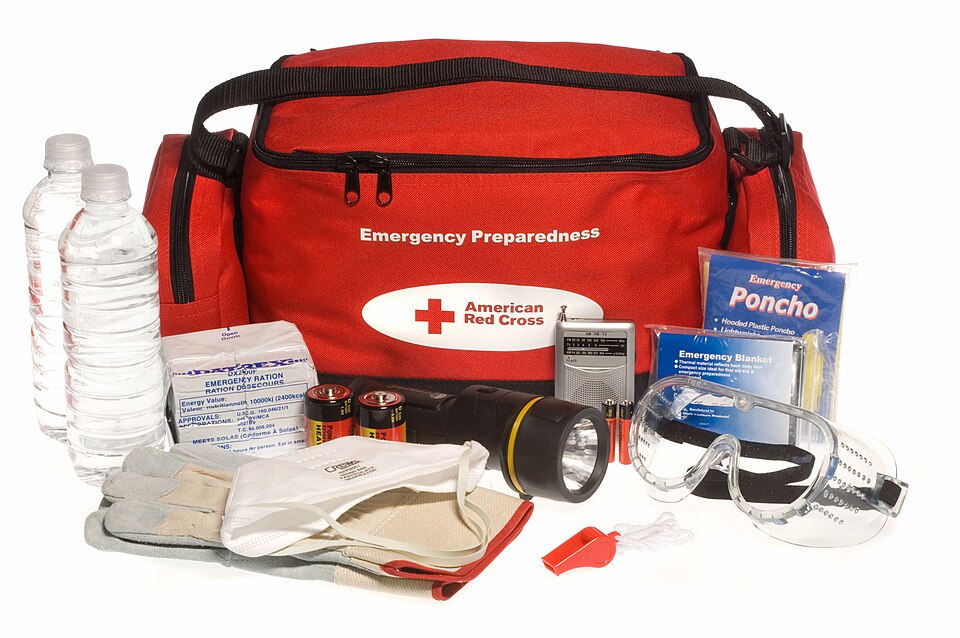
FEMA's Ready.gov guidance is the backbone here: supplies for several days, stored where you can reach them in the dark. The full federal list is longer; these are the items an outage actually uses.
- Water: one gallon per person per day for several days, for drinking and sanitation (Ready.gov's figure). Pets need their own share.
- Food: at least a several-day supply of non-perishable food, plus a manual can opener. Choose food nobody has to cook, in case the outage outlasts the backup power.
- Flashlights and extra batteries, staged where you can find them by touch. Not candles: open flame in a dark, stressed house is a fire risk with no upside.
- Cell phone chargers and a charged backup battery. Ready.gov lists the phone kit as part of the basic supplies, and the phone is your weather radio, map, and family phone tree in one.
- Prescription medicines organized and protected, with a plan for any that need refrigeration or power (a CPAP machine, a powered wheelchair). About half of all Americans take a daily prescription, per Ready.gov, so this line is most households, not a special case.
- Cash in small bills, and copies of insurance policies, identification, and bank records in a waterproof container or saved electronically (Ready.gov's documents line).
- A battery-powered or hand-crank radio, ideally a NOAA Weather Radio with tone alert, for the hours when the phone network is the thing that failed.
- A wrench or pliers to turn off utilities, and knowledge of where your main water shutoff and electrical panel are.
- Sleeping bags or warm blankets for each person, and a complete change of clothing for your climate.
- Kits in three places, per Ready.gov: home, work (enough for 24 hours), and the car. Re-think the kit every year and replace expired items.
The power part of the list
- Charge the power station, phones, laptops, and battery packs to full when a storm is forecast, not after the lights flicker.
- Know your list and its three numbers (running watts, starting target, average draw) before you need them. The sizing guide builds them from your appliances in about ten minutes.
- Fuel generators: fresh fuel stored outside the living space in approved containers, and a heavy cord long enough to keep the generator at least 20 feet from the house, exhaust pointed away.
- Battery stations: know which circuits or cords you will actually run. The two safe ways into a house are cords to each appliance, or an inlet box with a transfer switch or interlock, covered in how a generator connects to your house. Backfeeding a wall outlet is never on any list.
- Set the fridge and freezer to their coldest settings the night before a forecast outage, and group food so the doors open less.
- Fill jugs and the bathtub with water if pipes or a well pump are in your outage picture. A well pump house with no power has no water at all.
During the outage
- Start the food clock when the power dies: fridge food is safe about 4 hours with the door closed, a full freezer about 48 hours (24 if half full). Keep the doors shut; every look costs cold. The full rules are in the fridge and freezer guide.
- Never run a fuel generator, grill, or camp stove indoors or in a garage, and never heat with a gas oven. Carbon monoxide is odorless and is the outage killer in every region and season.
- Run backup power in blocks for the fridge and freezer and let insulation carry the gaps; save the steady draw for the things that cannot pause (a CPAP, the furnace fan in winter, the sump pump in a storm).
- Check on neighbors who live alone, and on anyone whose medical gear needs power. This line is on the list because it is the one that saves the most, and it costs a knock on a door.
- Report the outage to your utility and check its outage map before assuming a timeline; restoration estimates change as crews find the damage.
After the power comes back
- Apply the discard rule honestly: refrigerated perishables (meat, poultry, fish, eggs, milk, leftovers) that went more than 4 hours without power, or sat above 40 degrees F for more than 2 hours, get thrown out. Food with ice crystals, or at 40 degrees F or below, can be safely refrozen. Never taste food to decide; when in doubt, throw it out (USDA).
- Let appliances restart in stages rather than all at once, and check the sump pit, the basement, and any pipe that froze before you call it over. In cold regions the thaw is a second event; the winter outage guide covers its clocks.
- Recharge everything, restock what you used, and write down what ran out or annoyed you while it is fresh. The list you fix now is the list that works next time.
- Price what the outage cost you (spoiled food, a hotel night, takeout) with the outage cost calculator. That number is the honest budget for better backup before the next one.
Regional variants: what your part of the country adds
Winter storm country (the Midwest and Northeast). Your extra clocks are heat and pipes: a gas furnace needs its electric fan, and exposed pipes are at risk at 20 degrees F or below. Work the Midwest winter storm checklist for the drill and the winter outage guide for the timing, then your state page: Illinois, Indiana, Michigan, Minnesota, Wisconsin.
Hurricane country (Gulf and Atlantic coasts). Your outages are the long ones, measured in days, and they arrive with water. Fuel storage and solar refill matter more than battery size, supplies go up high and dry, and the generator plan has to assume gas stations are closed or out of power too. The kit and food sections above are your list; double the days.
Heat wave country (the South and Southwest). Your dangerous clock runs the other way: indoor heat. A battery that runs a fridge and fans is the core kit, air conditioning is usually beyond portable backup entirely, and the plan includes a cool place to go (a library, a mall, a cooling center) when the house passes safe temperatures. Check on elderly neighbors first; heat outages kill quietly.
Fire-season shutoff country (the West). Your outages are announced: utilities cut power on high-wind, dry days to prevent fires (called public safety power shutoffs). The warning is the gift: charge everything, fill the car, and do the fridge settings the night before, every time, because these can run for days and repeat across a season.
Questions readers ask
How long is food safe in a fridge without power?
About 4 hours with the door kept closed, per USDA guidance. A full freezer holds safe temperatures for about 48 hours, or about 24 hours if it is half full. After that, refrigerated perishables that sat above 40 degrees F for more than 2 hours should be thrown out. Food that still has ice crystals, or is at 40 degrees F or below, can be safely refrozen.
How much water should I store for an outage?
Ready.gov's figure is one gallon per person per day for several days, covering drinking and sanitation, plus extra for pets. A household of four planning for three days is storing about 12 gallons, which is why filling jugs and the bathtub when a storm is forecast is on the checklist: it tops up the stored supply at the last minute.
Can I run a generator in my garage with the door open?
No. Carbon monoxide builds up in a garage even with the door open, and it is odorless, so there is no warning before it harms you. Fuel generators run outdoors only, at least 20 feet from the house with the exhaust pointed away from windows and doors. Battery power stations are the indoor-safe option, which is much of why they exist.
What is the first backup power purchase most homes should make?
For most homes it is a battery station sized to the fridge, lights, phones, and router list, because that list covers food, light, and information through a typical outage, and the station is safe indoors with no fuel to store. Size it with your own list first: the sizing guide takes about ten minutes and prevents both the undersized and oversized versions of the mistake.
My power goes out for minutes, not days. Do I need any of this?
The kit and the food clock still apply to you, because the rare long outage is the one that finds every household eventually, and the kit is cheap. The backup power gear is the part you can scale down: a small station for the router and phones, or none at all, is a reasonable answer for a house whose outages are measured in minutes.
Who should skip this
Skip the gear sections if your home has a standby generator that starts by itself; your preparation is fuel, maintenance, and the kit sections above. Skip printing a regional variant that is not yours. And skip nothing in the kit section because your outages have been short so far: the kit is the cheapest insurance on this page, and it does not care why the power went out.
Your next step: size the backup power on this list with your own appliances.
Read the sizing guide